SKY SIRENS
Introduction
Every medal tells a story.
Some stories are celebrated for generations. Others quietly fade into history, remembered only by family, friends, and the few who served beside them.
Sky Sirens was created to help preserve those stories.
Each chapter introduces a real individual whose courage, sacrifice, and service left a lasting mark. These are not tales of fictional superheroes. They are accounts of ordinary men and women who answered an extraordinary call.
Major Poppy L. serves as your guide throughout this journey—not as the hero of these pages, but as a fellow officer, aviator, investigator, and storyteller. Her mission is to introduce each recipient with dignity and respect, allowing their lives, their service, and their sacrifice to remain at the heart of every chapter.
Whether these stories take place in the skies, at sea, or on distant battlefields, they all share one common thread: honor.
May we never forget those who served, those who sacrificed, and those whose courage continues to inspire generations yet to come.
Welcome to Sky Sirens.
The stories begin now.

CHAPTER 1
MEET MAJOR POPPY
Welcome to Sky Sirens.
My name is Major Poppy L., and I have the privilege of serving as your guide throughout this anthology. As an officer, aviator, investigator, and storyteller, my mission is to help preserve the remarkable stories of the men and women who earned one of America's most respected military decorations—the Purple Heart.
Every medal represents a life forever changed. Behind each Purple Heart is a moment of extraordinary courage, sacrifice, and devotion to duty. Some of these stories are well known. Many others have quietly faded into history, remembered only by loved ones and those who served beside them.
Together, we will explore the historical events surrounding each recipient, examine the circumstances that led to each award, and honor the service that earned our nation's lasting gratitude. Every Purple Heart recipient featured in Sky Sirens is a real individual whose service deserves to be remembered with dignity, accuracy, and respect.
My role is not to stand in the spotlight. It is to shine a light on those who answered their country's call, often at tremendous personal cost. Their courage speaks far louder than any words I could offer.
Before we begin our First Alert, we must first understand the Purple Heart itself—its history, how it came to be, who is eligible to receive it, how it is awarded, and why it remains one of the most meaningful honors bestowed upon members of the United States Armed Forces.
Once we understand the medal, we can better appreciate the remarkable individuals who earned it.
If you're ready, let's begin our journey together.
— Major Poppy L.
Purple Heart 💜 🎬
https://www.instagram.com/reel/DbnrkKzulsd/?igsh=MTF5dGpvajY5aTV4eA==
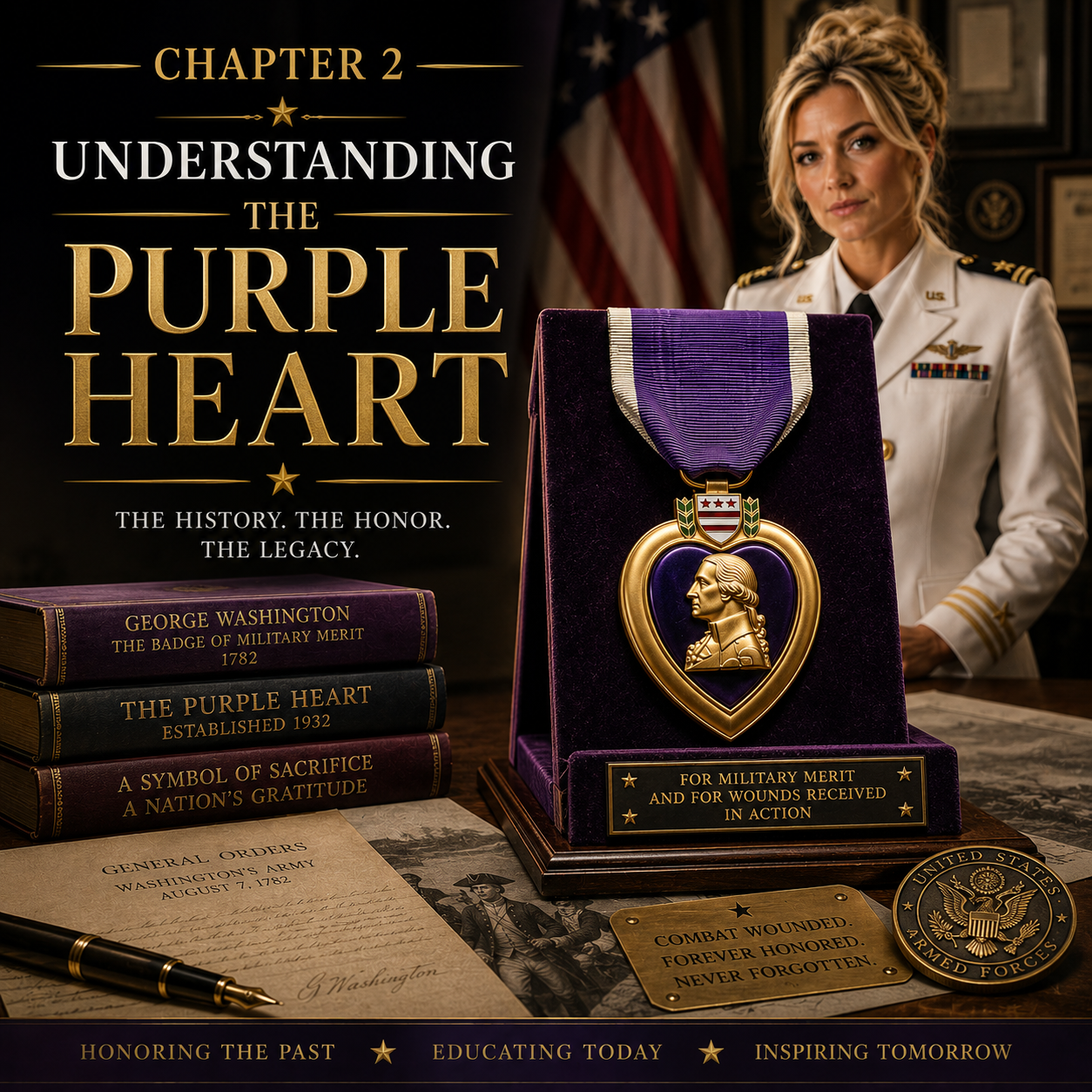
CHAPTER 2
UNDERSTANDING THE PURPLE HEART
Before we begin our First Alert, it is important to understand the history and significance of one of America's most respected military decorations—the Purple Heart.
The Purple Heart traces its origins to August 7, 1782, when General George Washington established the Badge of Military Merit during the American Revolutionary War. It was one of the first military decorations created to recognize valor, faithful service, and exceptional merit among enlisted soldiers. Although the award eventually fell out of use, its ideals of courage and sacrifice endured.
Nearly 150 years later, on February 22, 1932—the 200th anniversary of George Washington's birth—the Badge of Military Merit was revived and redesigned as the Purple Heart. Since then, it has become one of the most recognized and respected military decorations in the United States.
Unlike medals awarded for achievement, leadership, or distinguished service, the Purple Heart is unique. It is awarded to members of the United States Armed Forces who are wounded or killed as a direct result of enemy action while serving their country.
Receiving the Purple Heart is not the result of nomination or competition. Eligibility is determined through official military records, medical documentation, operational reports, and other supporting evidence. Military authorities carefully review each case to ensure it meets the requirements established by law and military regulations before the award is approved.
The Purple Heart is awarded in the name of the President of the United States to eligible members of the Army, Marine Corps, Navy, Air Force, Coast Guard, and Space Force. Although the medal is relatively small in size, it represents an immeasurable sacrifice.
Behind every Purple Heart is a human story—a family forever changed, a fellow service member remembered, and a moment when duty demanded more than most people are ever asked to give.
Some recipients returned home to continue serving their communities. Others carried visible and invisible wounds throughout their lives. Many never returned at all. Yet each left behind a legacy of courage that deserves to be remembered.
As we move forward through Sky Sirens, our focus is not simply on the medal itself, but on the remarkable individuals who earned it. Their stories remind us that freedom has always carried a cost, and that every generation has been shaped by men and women willing to bear that burden for others.
Now that we understand the history, purpose, and meaning of the Purple Heart, we are ready to begin.
Our First Alert awaits.
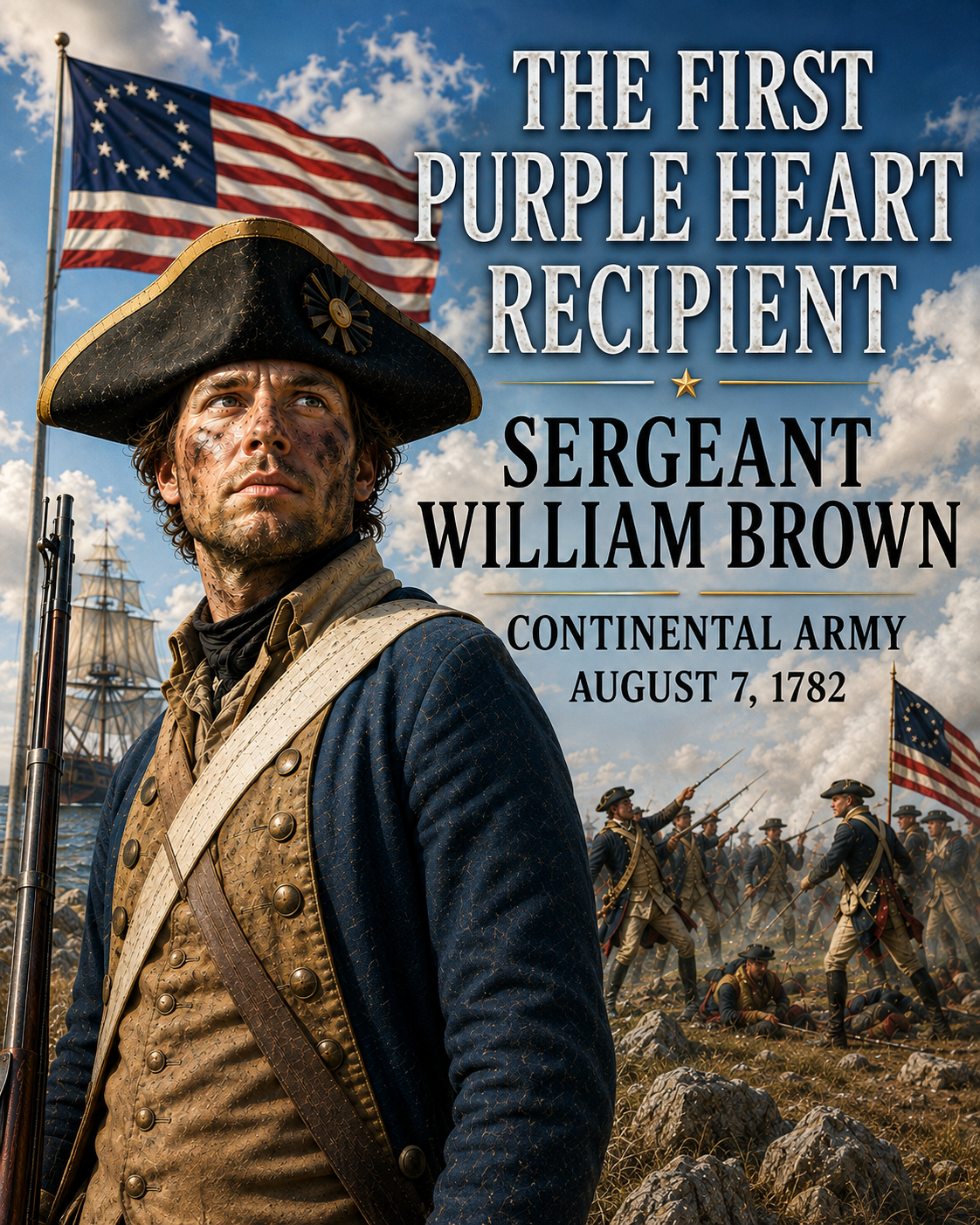
CHAPTER 3
FIRST ALERT
SERGEANT WILLIAM BROWN
5th Connecticut Regiment
Badge of Military Merit Recipient
October 14, 1781
As darkness settled over Yorktown, Virginia, thousands of American and French soldiers surrounded the British army commanded by Lieutenant General Charles Cornwallis. The siege had entered its final days, but one dangerous obstacle still stood between the Allied forces and victory.
That obstacle was Redoubt No. 10.
The word redoubt comes from the French word “redoute”, meaning a fortified place of refuge or defense. Redoubt No. 10 was one of several British defensive positions surrounding Yorktown. Built from packed earth, heavy timbers, trenches, and sharpened tree branches called “abatis”, it guarded one of the most critical approaches to the town. As long as it remained in British hands, General George Washington's army could not complete the siege.
Washington ordered the position taken.
Among the soldiers selected for the assault was Sergeant William Brown of the 5th Connecticut Regiment. Brown was chosen to lead the advance party—the first soldiers expected to cross the deadly obstacles and engage the enemy at close range. It was one of the most dangerous assignments of the entire campaign.
Shortly after nightfall, the attack began.
Without waiting for engineers to completely clear the abatis, Brown pressed forward with his men under intense musket fire. Crossing the obstacles and closing the distance with fixed bayonets, the Americans stormed the fortification in fierce hand-to-hand combat. During the assault, Brown was wounded in the hand by a British bayonet but continued the attack until Redoubt No. 10 was captured.
Although the planning, positioning, and advance to the objective took considerably longer, the assault itself was remarkably swift. Once the Americans reached the British defenses, the fierce hand-to-hand fighting lasted only about ten minutes before Redoubt No. 10 fell into Allied hands.
The capture of Redoubt No. 10 opened the way for the Allied forces to complete their siege works. Five days later, on October 19, 1781, Lord Cornwallis surrendered the British Army at Yorktown, effectively bringing the major fighting of the American Revolution to an end.
Sergeant William Brown's courage did not go unnoticed.
On May 3, 1783, General George Washington awarded Brown the Badge of Military Merit in recognition of his gallantry and faithful service. Only three soldiers are known to have received the award during the Revolutionary War. Nearly 150 years later, the decoration would be revived and renamed the Purple Heart, making Sergeant William Brown one of the earliest men in American history to stand at the beginning of that enduring legacy.
As we close our First Alert, we remember not only Sergeant William Brown's extraordinary courage, but also the countless men and women who followed in his footsteps. Every Purple Heart awarded since has carried forward the same enduring ideals of sacrifice, honor, and unwavering devotion to duty.
— Major Poppy L.

CHAPTER 4
SELFLESS VALOR
The Badge of Military Merit faded from military tradition, but selfless valor remained, sustaining the growth of a nation on the move.
While the award itself disappeared, the nation did not stand still. Vast forests, fertile farmland, timber, cotton, and other natural resources helped fuel a growing economy, while westward expansion opened new frontiers and opportunities. As the decades passed, the Industrial Revolution transformed the way Americans lived, worked, traveled, and communicated. Through every season of growth, every period of innovation, and every conflict that tested the nation's resolve, one constant remained—selfless valor.
It's worth taking a moment to understand what lies at the heart of every story in this anthology.
Valor is more than courage. Courage can exist in a single moment. Valor is courage sustained by duty. It is the willingness to place the safety and welfare of others above your own, even when the cost may be great.
As the United States matured, so too did the character of those who answered its call. The War of 1812, the Mexican-American War, the Civil War, the Spanish-American War, and countless other conflicts tested new generations of Americans. Though the Badge of Military Merit was no longer awarded, the spirit it was created to honor never disappeared.
History remembers some names in great detail. Others fade quietly with the passage of time. Yet the measure of their sacrifice remains the same. Whether remembered by millions or known only to family and fellow service members, each contributed to the growth, security, and enduring strength of a nation on the move.
As an investigator, I've learned that history isn't always preserved equally. Some chapters are rich with letters, journals, official reports, and eyewitness accounts. Others leave behind only fragments. Yet even the smallest fragment can reveal extraordinary courage.
The story of Sergeant William Brown reminds us of that truth. History preserves only a glimpse of his life, yet it preserves enough to remind us that selfless valor has never depended upon recognition.
For nearly 150 years, the Badge of Military Merit remained absent from military tradition. It was created to recognize singularly meritorious service, but after the Revolutionary War it quietly faded from military use. The medal disappeared, yet the character it celebrated endured in every generation that followed.
A lot had changed in 150 years. The country had grown. New towns became cities. Railroads stretched across the land, and the Industrial Revolution transformed the way Americans lived and worked. Through it all, new generations answered the call to serve, and every conflict added another chapter to our nation's story.
The Purple Heart is one of our nation's most recognized military decorations, yet no medal can fully measure the sacrifice it represents.
As the nation prepared to commemorate the 200th anniversary of George Washington's birth, General Douglas MacArthur, serving as Chief of Staff of the United States Army, believed it was time to bring Washington's vision back. Rather than create an entirely new military decoration, he championed the revival of the Badge of Military Merit.
On February 22, 1932, Washington's original award was reborn as the Purple Heart. The decoration evolved to recognize those wounded or killed by enemy action while preserving the enduring principle Washington established 150 years earlier—that extraordinary sacrifice and faithful service should never pass unnoticed.
The story of the Purple Heart did not begin again.
It simply continued.
— Major Poppy L.
Selfless Valor 🦅 🎬
https://www.instagram.com/reel/DbqmXPgO4nO/?igsh=MW9uMGIzdDB1ODZ3aQ==