

The Balladeer and The Great Horned Owl 🦉
💬 THE BALLADEER OF LOCH RAVEN
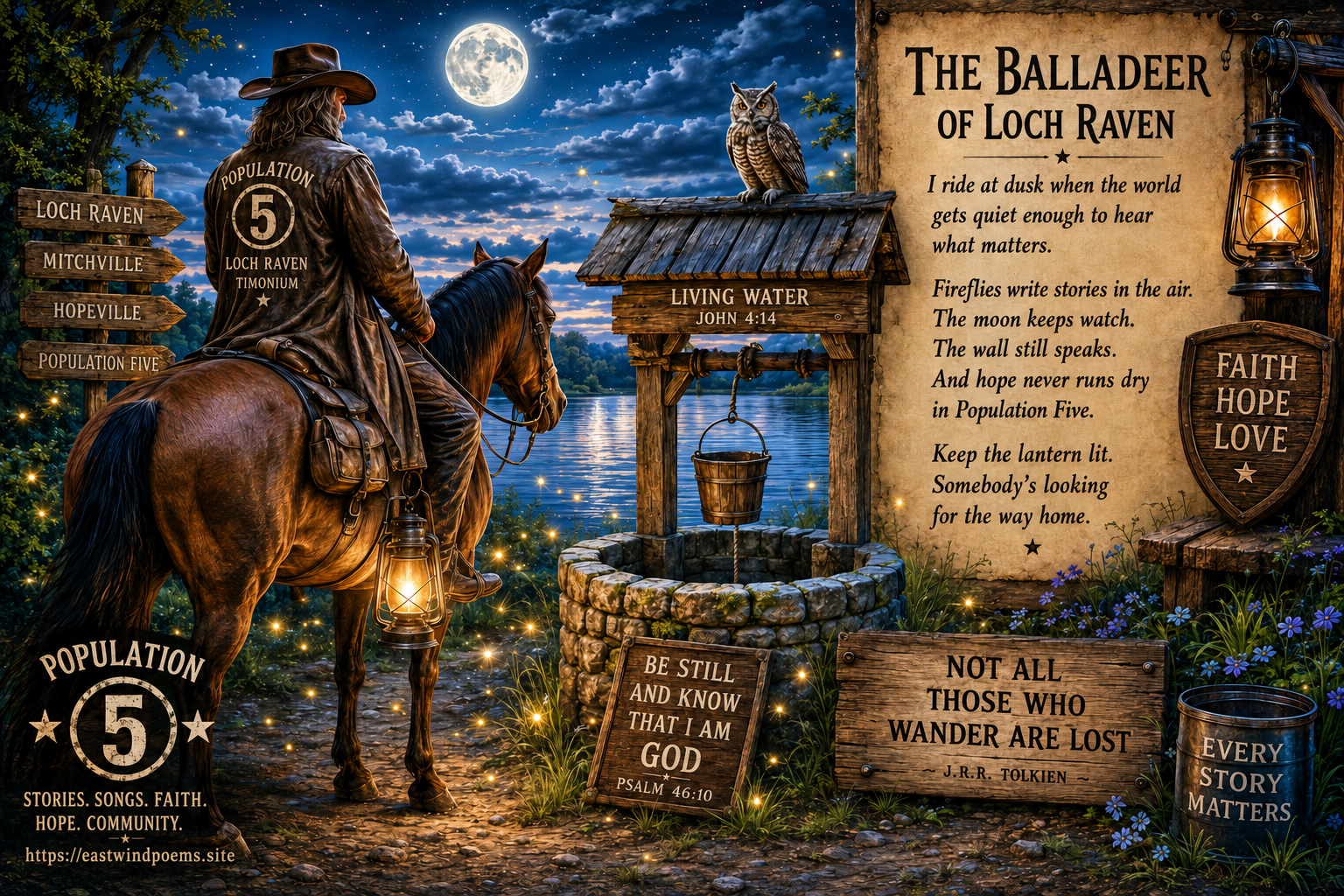
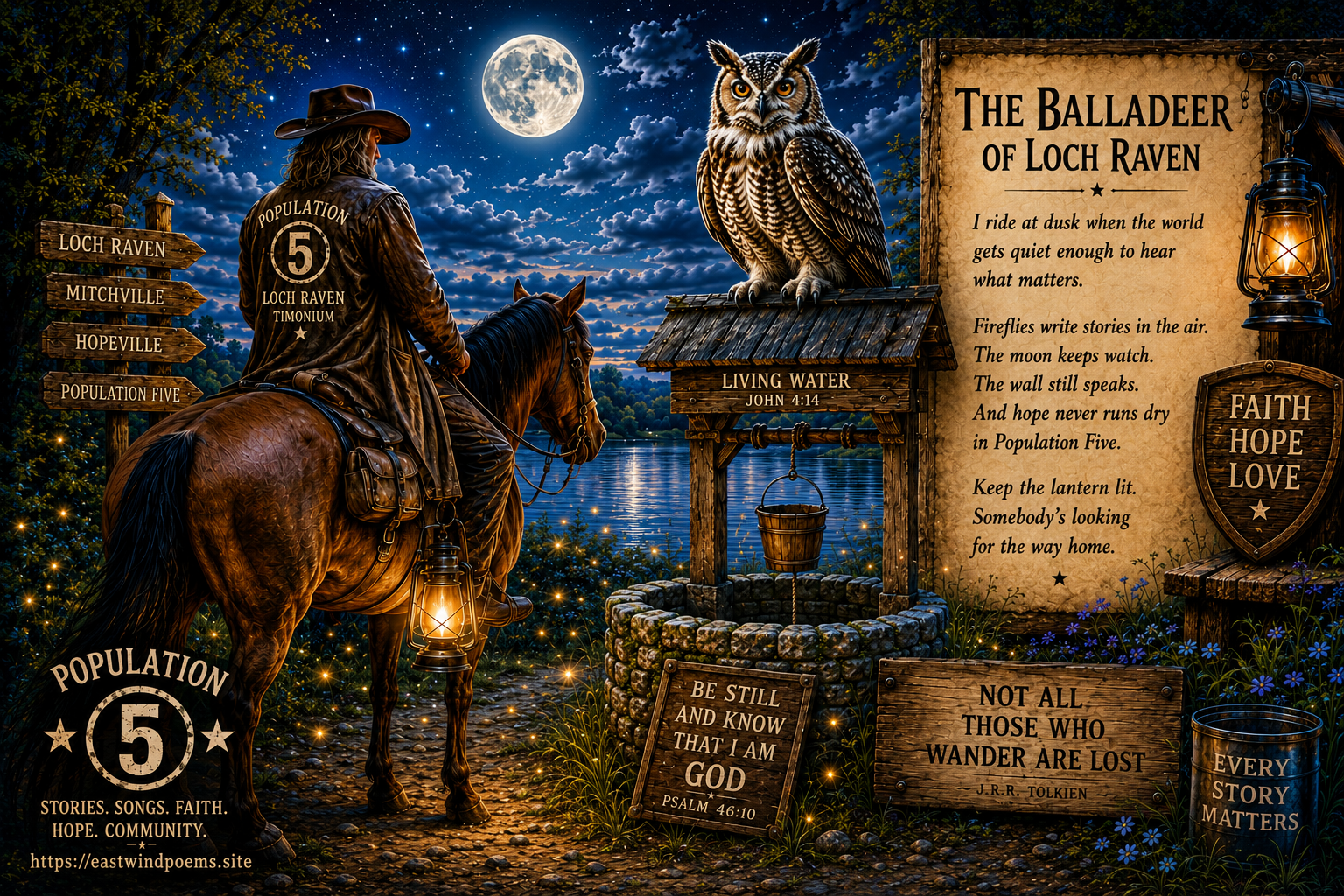
"I ride at dusk when the world gets quiet enough
to hear what matters.
Fireflies write stories in the air.
The moon keeps watch.
The wall still speaks.
And hope never runs dry in Population Five.
Keep the lantern lit.
Somebody's looking for the way home."
🌙🦉✨
🦉 Great Horned Owl (Bubo virginianus)
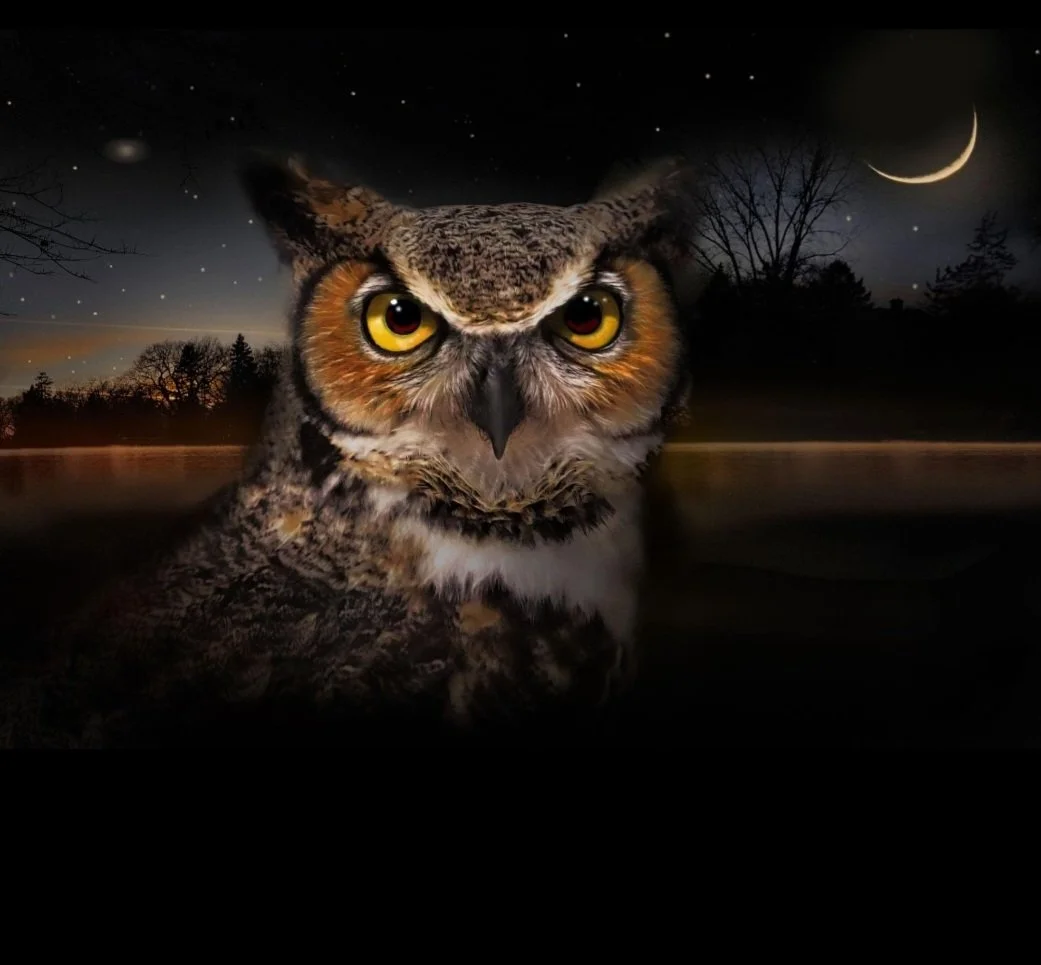
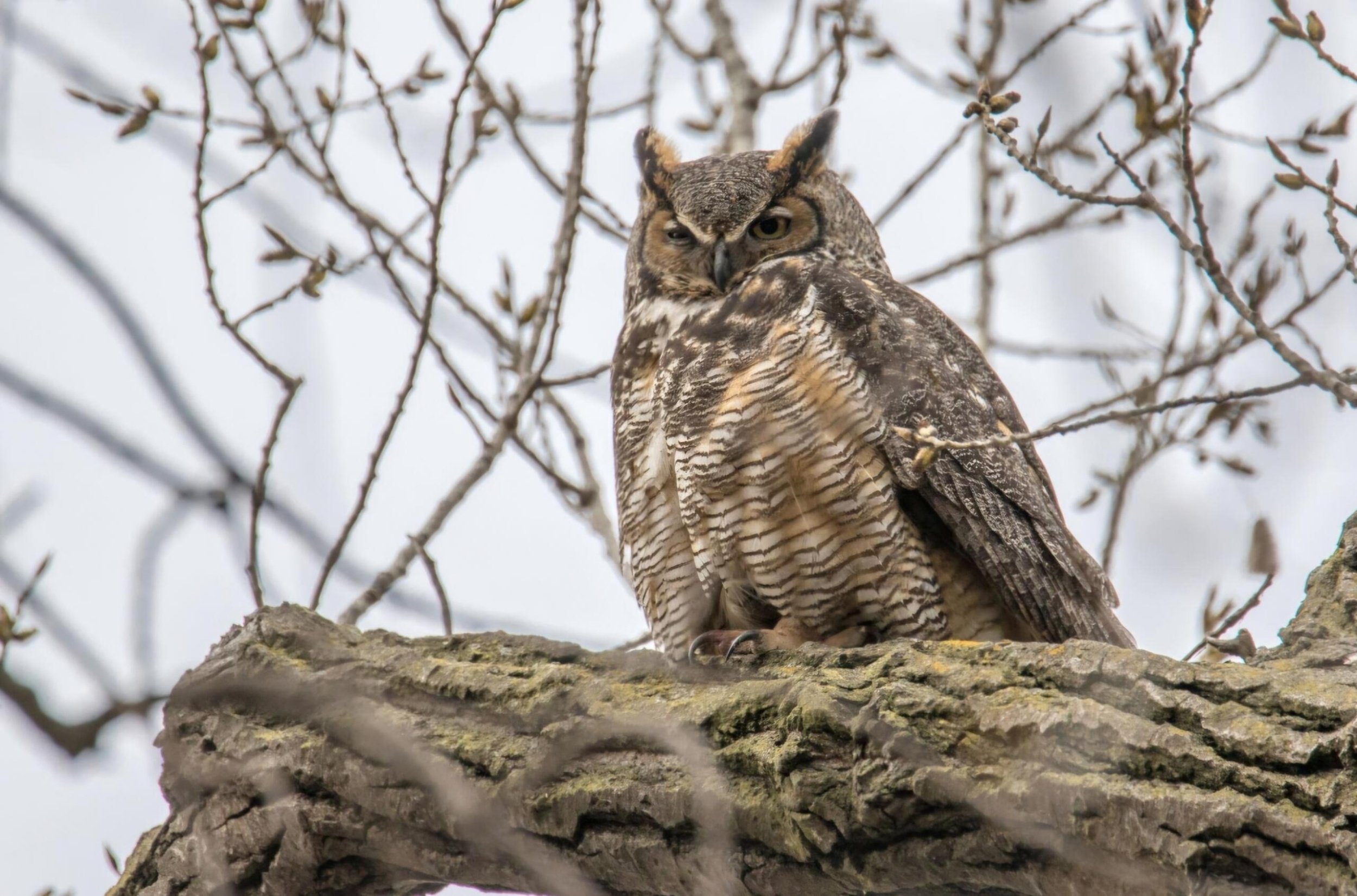
The Great Horned Owl is one of North America's most recognizable birds of prey, known for its distinctive ear tufts, piercing yellow eyes, and deep, resonant hooting call. A year-round resident of Maryland, including the Baltimore and Loch Raven regions, it can be found in forests, wetlands, farmland, parks, and suburban woodlands.
Great Horned Owls do not migrate and often remain in the same territory throughout their lives. They typically nest in large trees, abandoned hawk or crow nests, old barns, and occasionally man-made structures. Pairs are generally monogamous and may remain together for many years. Females usually lay 1–4 eggs, with 2 being most common.
An apex nocturnal predator, the Great Horned Owl feeds on rabbits, mice, rats, squirrels, snakes, skunks, waterfowl, and other birds. As a top predator, it helps maintain healthy ecosystems by controlling prey populations and contributing to the balance of the food web.
Habitat: Forests, fields, wetlands, parks, and suburban woodlands
Range: Most of North America, including all of Maryland
Status: Common and widespread
