MAY CHRISTMAS STAY WITH YOU 🎁 WARTIME CAMBRIDGE — 1943 🇬🇧
Inspired by C. S. Lewis’s The Screwtape Letters


CHAPTER EIGHT
MAY CHRISTMAS STAY WITH YOU 🎁
WARTIME CAMBRIDGE — 1943 🇬🇧
Inspired by C. S. Lewis’s The Screwtape Letters
The radio interrupted with an urgent bulletin. Everyone stopped to listen.
Another report from the war. By now, such interruptions had become part of ordinary life. Britain had been fighting for more than four years, and no one knew how much longer it would last.
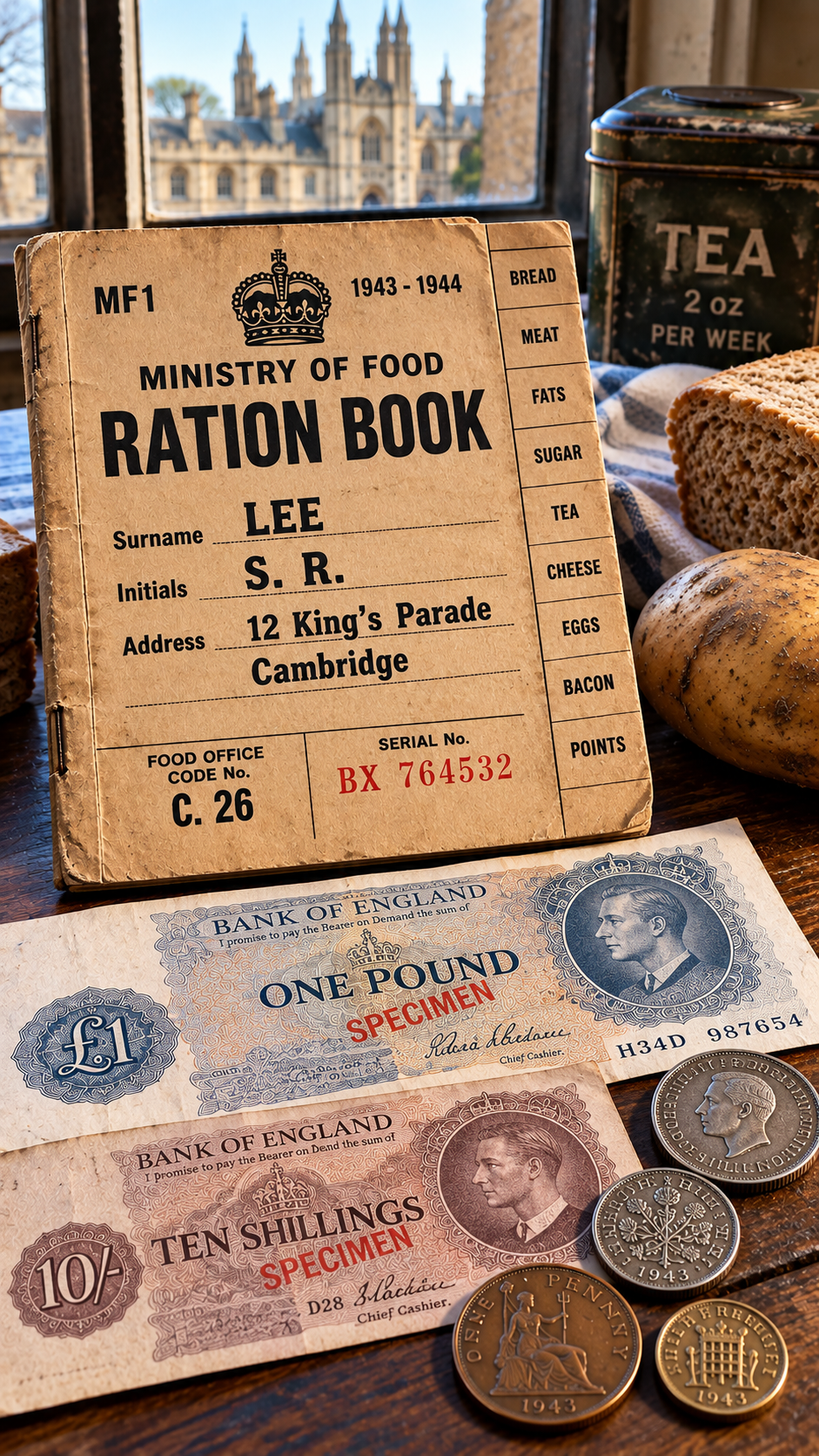
When the bulletin ended, the room slowly returned to Christmas. Conversation resumed and tea was poured. Food was passed around the table, but even an ordinary meal looked different in wartime Britain. Ration books were part of everyday life. People stretched what they had, grew what they could and wasted very little. When the store shelves were empty, it meant exactly that: it was gone. Things got so bad that even a potato peel had value.
Kitchen scraps could feed the hens or return to the soil, where worms and microorganisms quietly helped turn waste into new life. Nothing that could still serve a purpose was casually thrown away.
This was life in wartime Cambridge, 1943. Scarcity, uncertainty and destruction had become part of everyday life. Yet Christmas was still being celebrated. In homes opened to family, friends and neighbors, people found fellowship, shared what they had and remembered the birth of Jesus Christ, the Prince of Peace.
In one of those homes, a few friends had gathered together.
Blue and Jean were there, along with two women Jean knew. One of them was Erynn. Jean introduced her to Scott, and before long the conversation wandered toward books.
“I love reading stories,” Erynn said.
Scott smiled. “Great. I love telling them.”
He reached for the book on the table.
“Then let me tell you about this one.”
He picked up The Screwtape Letters.
Scott explained that C. S. Lewis had imagined a series of letters written by Screwtape, a senior devil, to his nephew Wormwood, a younger tempter assigned to one particular human being. Lewis called him simply the Patient.
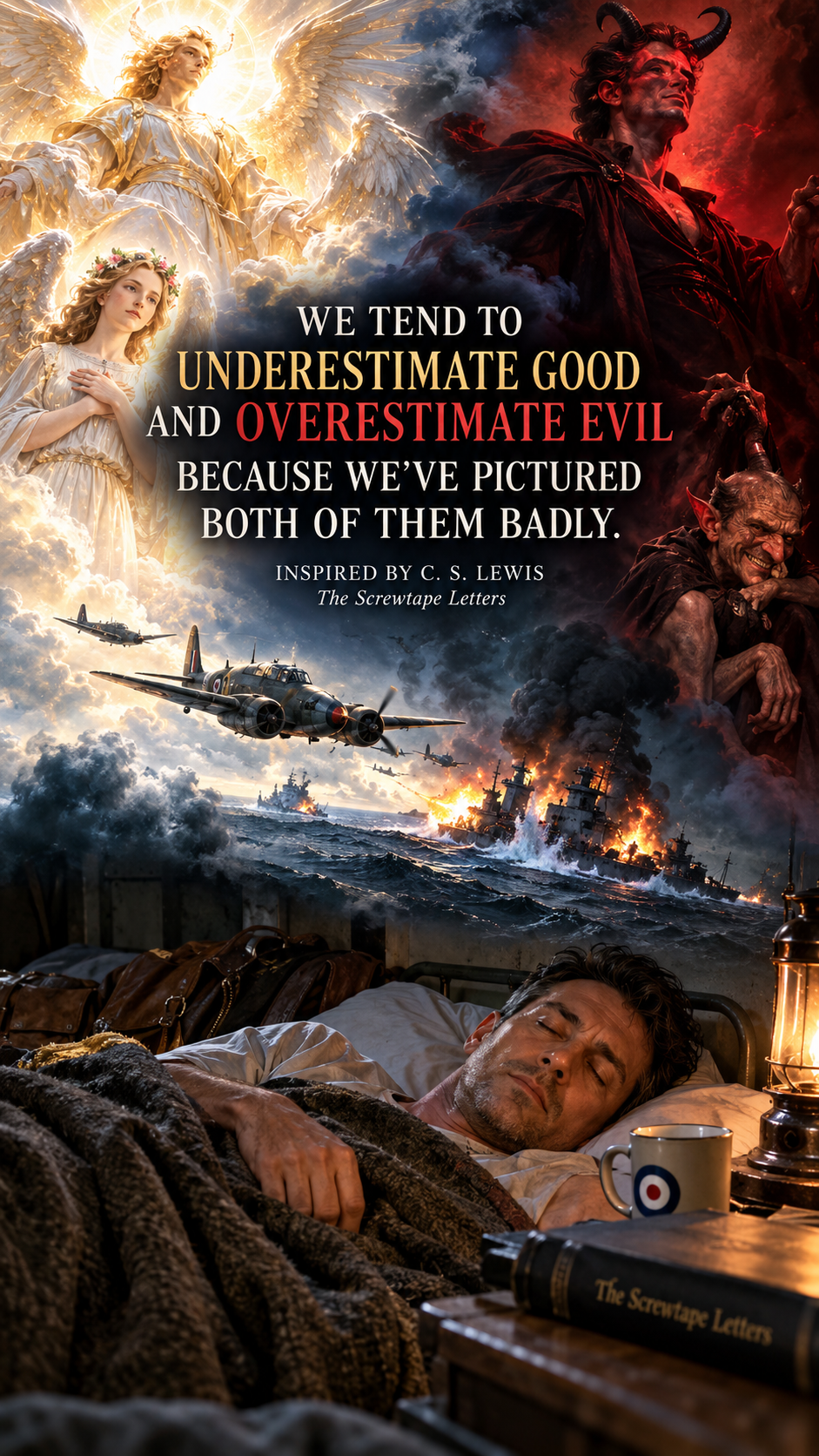
The story gave a voice to things people usually could not see: temptation, distraction, fear, pride, appetite and influence. Screwtape could not control the Patient, but he could try to influence where the man looked, what he thought about and what he ignored.
There was a sentence in the Preface that had stayed with Scott. Lewis wrote that the history of the European war mattered to Screwtape only when it happened to “impinge upon the spiritual condition of one human being.”
Now Scott was beginning to understand why.
Screwtape did not have to create the circumstances surrounding a person. He only had to find a way to use them.
Scott opened to Letter One.
Wormwood had apparently been encouraging his Patient’s reading and the influence of a materialist acquaintance. The Patient had not yet become a Christian, and Wormwood seemed confident in his approach.
Screwtape was not.
The danger was that the Patient might begin seriously asking whether what he believed was actually true. Keeping the man inside a familiar way of thinking was safer than allowing him to question it.
Lewis was using materialism in a particular sense. It was not simply the desire for money or possessions. It was the belief that material reality was all there was. The world had changed enormously since Lewis wrote the letter, but the human tendency toward distraction had not. People could still become so occupied with what was immediately in front of them that larger questions were pushed aside.
That brought Scott back to the atheist in the British Museum.
He already knew the story. The man had been reading in the British Museum when his thoughts began moving somewhere Screwtape did not want them to go. Screwtape did not defeat those thoughts with some brilliant argument. The man became hungry, went to lunch and returned to the familiar course of his life.
But reading Letter One again, Scott noticed something he had missed.
The man in the British Museum was not Wormwood’s Patient. He had been Screwtape’s.
Screwtape was teaching Wormwood from experience. He had spent years influencing that man, and when a moment of genuine reconsideration arrived, he did not need some spectacular act of evil. He needed an interruption.
Lunch was enough.
The man had not chosen Hell. He had simply stopped thinking about something important. Influence did not have to look frightening, and it did not have to remove a person’s ability to choose. Sometimes it merely encouraged a person to look somewhere else.
But knowing the better choice did not guarantee that anyone would make it. Paul had written about that struggle:
“For I do not do the good I want, but the evil I do not want is what I keep on doing.”
Romans 7:19
Scott knew the feeling. Understanding temptation did not make him immune to it. Recognizing distraction did not mean he would never be distracted. No one could identify every influence, see every blind spot or make every decision perfectly.
That was why the answer could not simply be greater awareness. For the believer, there was also grace—dependence upon God for wisdom about what to resist, what to love and what to pursue.
Scott looked around the table. Food, tea, books, money and a ration book were ordinary material things. None of them was evil. Lewis had been writing about materialism as a way of understanding reality, not about material things themselves. But the distinction made Scott notice something else. A meal could distract one man from an important thought. A meal could also be shared with someone who needed it.
The question was not whether material things were good or evil. It was what a person chose to do with them.
The war was one kind of struggle. The struggle within the human being was another. Circumstances could influence a person, but they could not make every choice for him.
So what would one human being choose to do?
Another verse came to mind:
“Let him turn away from evil and do good; let him seek peace and pursue it.”
1 Peter 3:11
Peace was not something a person had to wait for.
Seek peace and pursue it.


🎬 BETWEEN WAR AND PEACE⚡
https://www.instagram.com/reel/DeN_eekOE2j/?stkn=MWd5bzIzNmk2ZmVmdw==