Created to Worship 🙏
NEURON SIGNAL TRANSMISSION 🎬
Electrical ➡️ Chemical
https://meta.ai/share/a/ecbee9df-3db6-4af6-b00b-c3390da13fc7
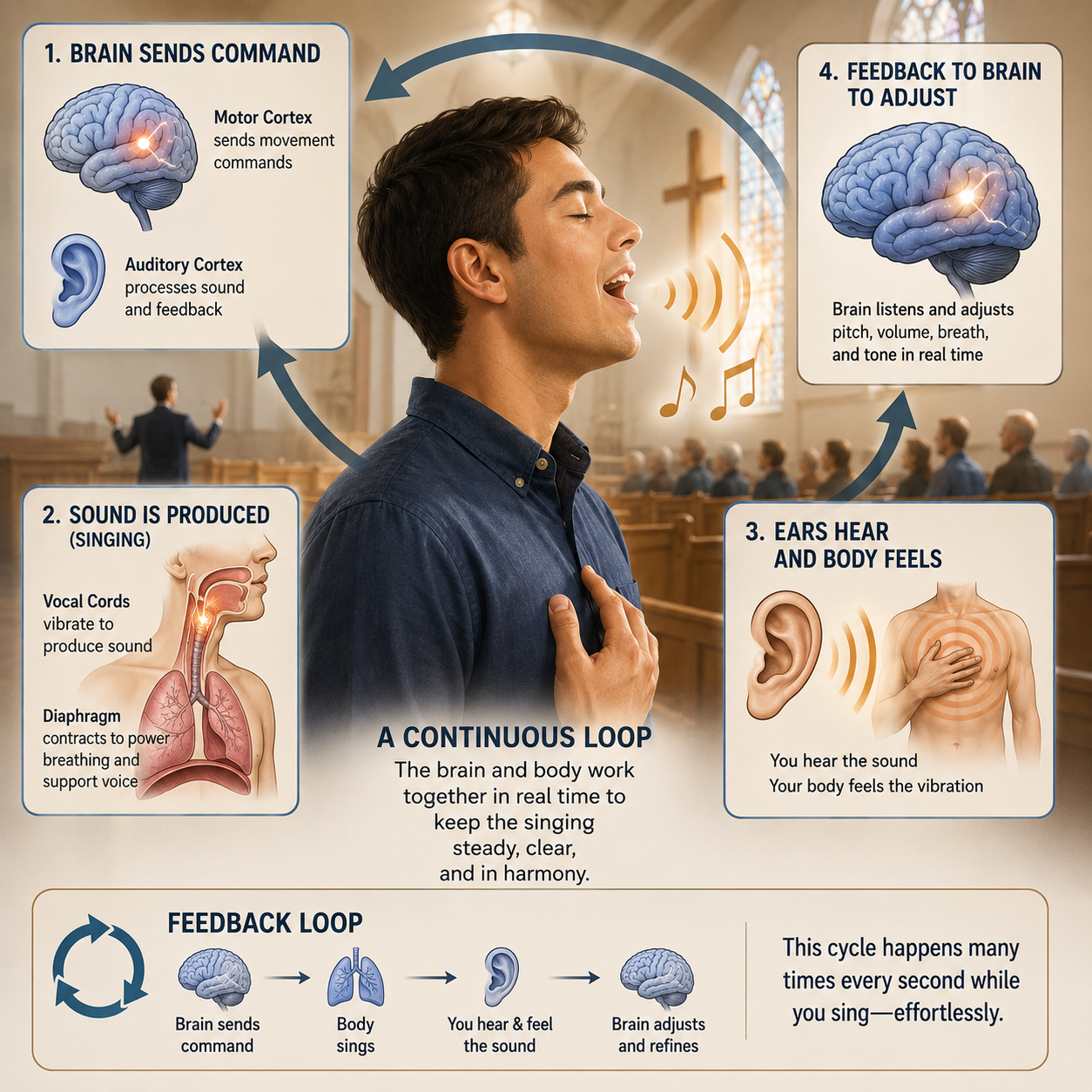
When we stand to sing, it may feel effortless, but an extraordinary amount of coordination is taking place.
The brain first prepares the body to sing. It sends signals that coordinate breathing, posture, and the muscles controlling the vocal cords. As sound leaves the mouth, another process immediately begins. Our ears hear our own voice, our body senses the vibrations, and that information is sent back to the brain.
Then something remarkable happens.
The brain compares what it intended to sing with what it actually hears and feels. Almost instantly, it makes tiny adjustments to our pitch, volume, breathing, timing, and tone. This continuous cycle repeats over and over, helping us stay in rhythm with the music and in harmony with the congregation.
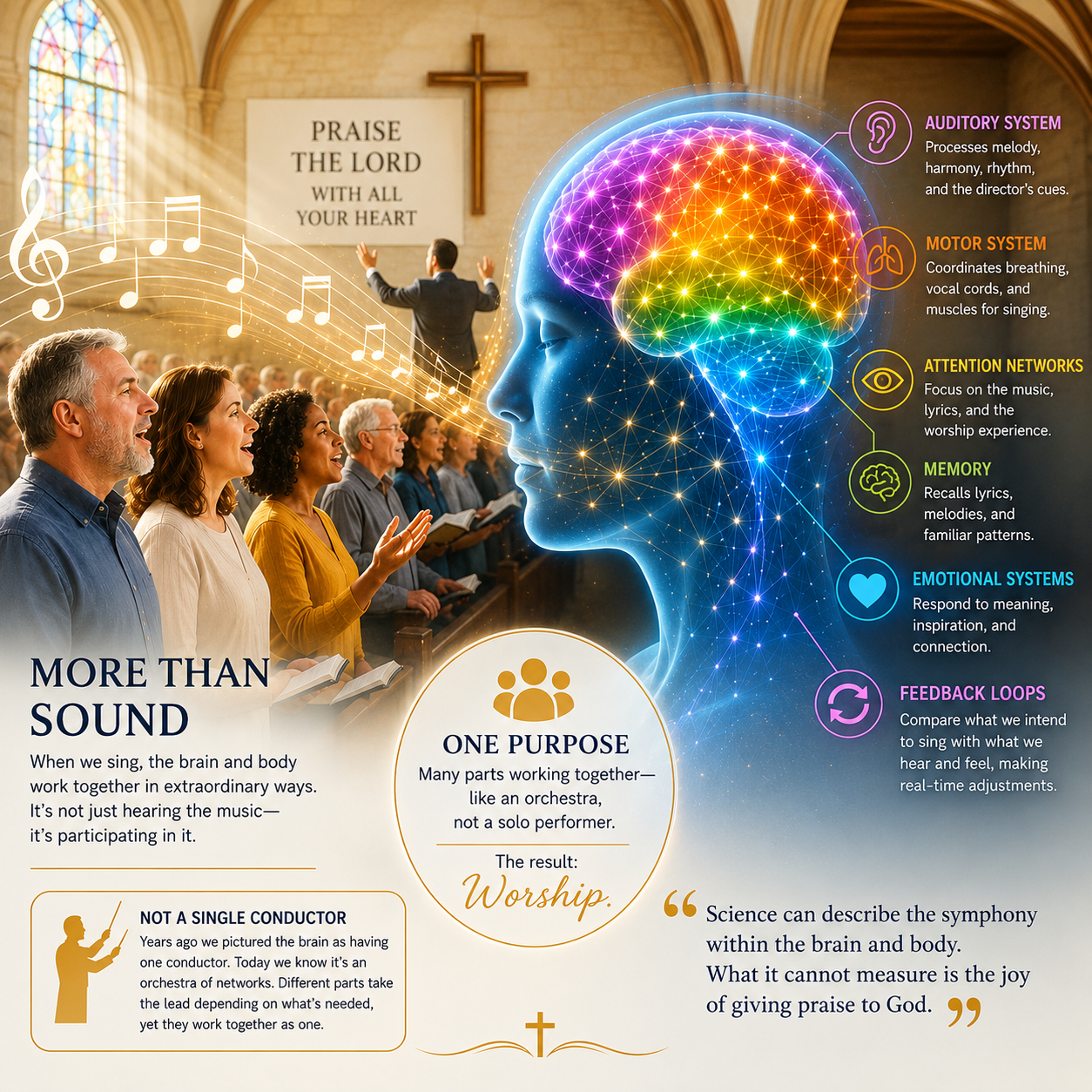
For many years, scientists often described the brain as though it had a single conductor directing the orchestra. Today, neuroscience paints a richer picture. Rather than one conductor controlling everything, countless networks communicate with one another through an ongoing exchange of electrical and chemical signals. Depending on the task, different networks become more active, working together through continuous feedback.
Perhaps that's one reason congregational singing feels so natural. Hearing, breathing, movement, memory, attention, and emotion aren't working separately—they're working together.
Science helps us appreciate how beautifully these systems cooperate. For me, that understanding doesn't take away from worship. It makes the experience even more meaningful. Every hymn becomes a reminder of the remarkable design behind the simple act of giving praise to God.
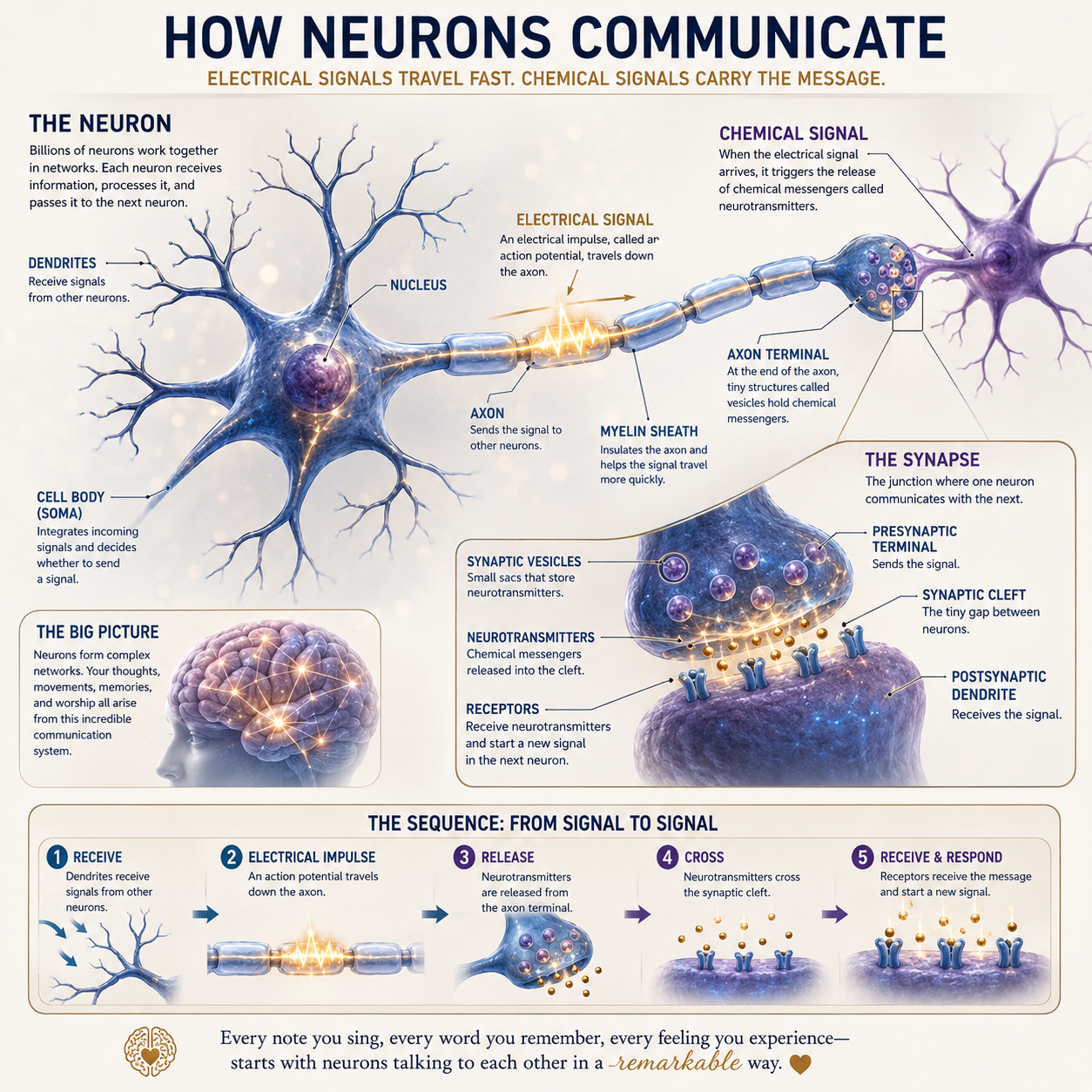
If the previous illustration explained what the brain is doing while we sing, this one offers a glimpse into how it communicates.
The human brain contains billions of neurons, each connected to thousands of others, forming one of the most intricate communication networks known to science. No single neuron understands the whole song. Instead, each one receives information, processes it, and passes it along to the next.
Communication begins as a tiny electrical impulse traveling down a neuron's axon. When it reaches the end, the signal can't simply jump to the next neuron. Instead, it triggers the release of microscopic chemical messengers called neurotransmitters. These cross the tiny gap between neurons, called a synapse, where they bind to the next cell and begin the process again.
This exchange happens with astonishing speed, countless times every second.
As we sing, those signals help coordinate breathing, vocal muscles, hearing, memory, attention, timing, and emotion. Rather than following instructions from a single "conductor," billions of neurons work together through an ongoing conversation of electrical and chemical signals. From that remarkable cooperation comes something that feels completely effortless.
The next time I stand in church and sing a hymn, I doubt I'll be thinking about neurons or synapses. But knowing they're quietly working together behind the scenes has given me an even greater appreciation for the extraordinary design of the human brain—and for the simple privilege of lifting my voice in praise.
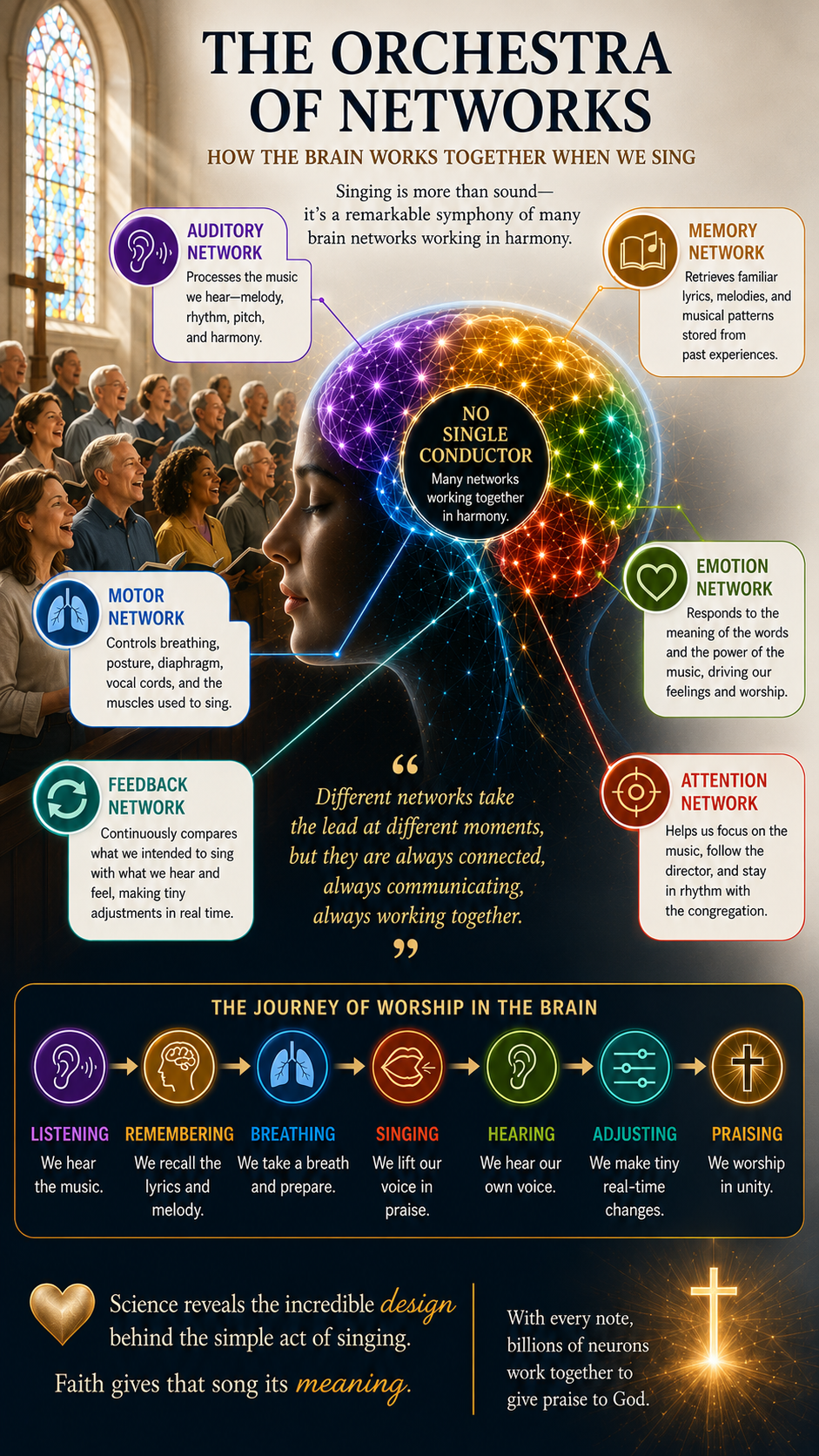
The more I explored the science, the more I appreciated the remarkable design behind something I had always taken for granted.
Every hymn reminds me that beneath one simple act of worship lies an extraordinary harmony of mind, body, and spirit.
Science has given us an incredible glimpse into that hidden world, revealing the countless processes quietly working together every time we lift our voices in praise.
For me, that knowledge doesn't diminish the experience of worship. It deepens it. Every Sunday, I am reminded that even the simplest act of praise is a blessing—an opportunity to honor God and glorify Him.