

Berkutchi: Golden Eagle Hunter
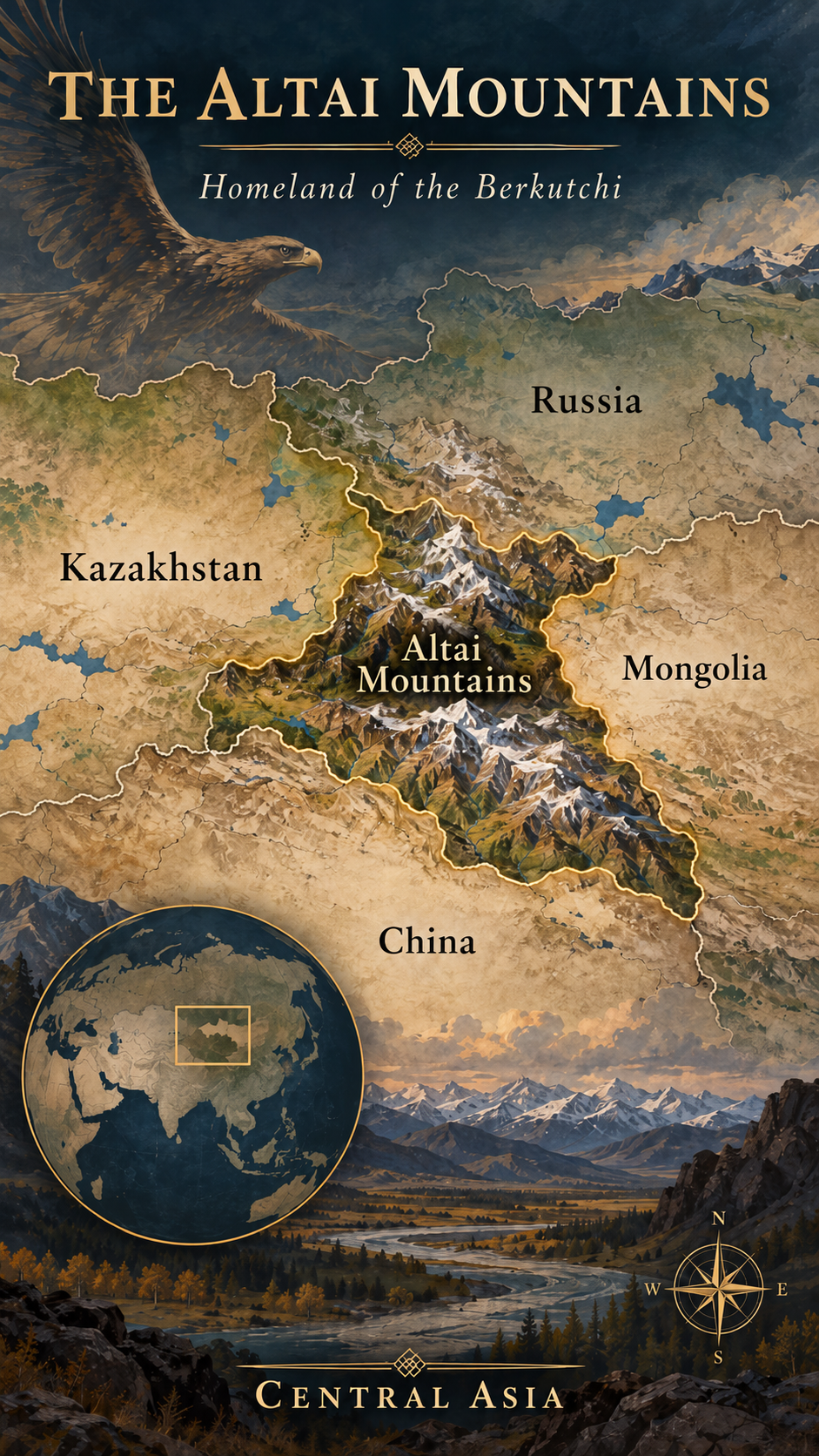
Chapter One — The Altai Mountains
Before cities rose across the modern world, before borders divided nations, there were the mountains.
Stretching across the heart of Central Asia, the Altai Mountains have stood for thousands of years—shaped by wind, snow, and time. Their towering peaks, sweeping valleys, and endless steppe have long provided a home for an extraordinary variety of wildlife, including snow leopards, wolves, ibex, golden eagles, and countless other species that have adapted to one of Earth's most demanding landscapes.
But the Altai are more than a wilderness.
For generations, these mountains have also been home to the Kazakh people, whose lives have been shaped by the land they call home. Here, survival has always depended upon knowledge, resilience, and a deep understanding of nature.
Among the many traditions born from this remarkable landscape, one continues to capture the imagination of the world.
The ancient partnership between a hunter... and a golden eagle.

Chapter Two — A Partnership Forged in Trust
For centuries, the vast landscapes of the Altai Mountains have been home to an extraordinary tradition unlike any other.
Among the Kazakh people, there are those known as Berkutchi—Golden Eagle Hunters. Their relationship with the eagle is not one of domination, but of patience, trust, and mutual respect, developed over years of careful training and daily companionship.
To witness a golden eagle returning to its hunter is to see more than skill. It is the result of countless hours spent together, each learning to understand the other. Neither can succeed without confidence in the partnership they have built.
Long before the hunt begins, a bond has already been formed.

Kazakh Eagle Hunter 🦅 🦊 🎬
https://www.instagram.com/reel/DbLYkBoO54f/?igsh=MXQxa3A0Yncya2FlMA==
EYAS — YOUNG EAGLE 🦅
🎬 Video-Clip
https://www.instagram.com/reel/DbMRDfkJ078/?igsh=NjVkNmJld2lzYW5i
Chapter Three — The Beginning of a Partnership
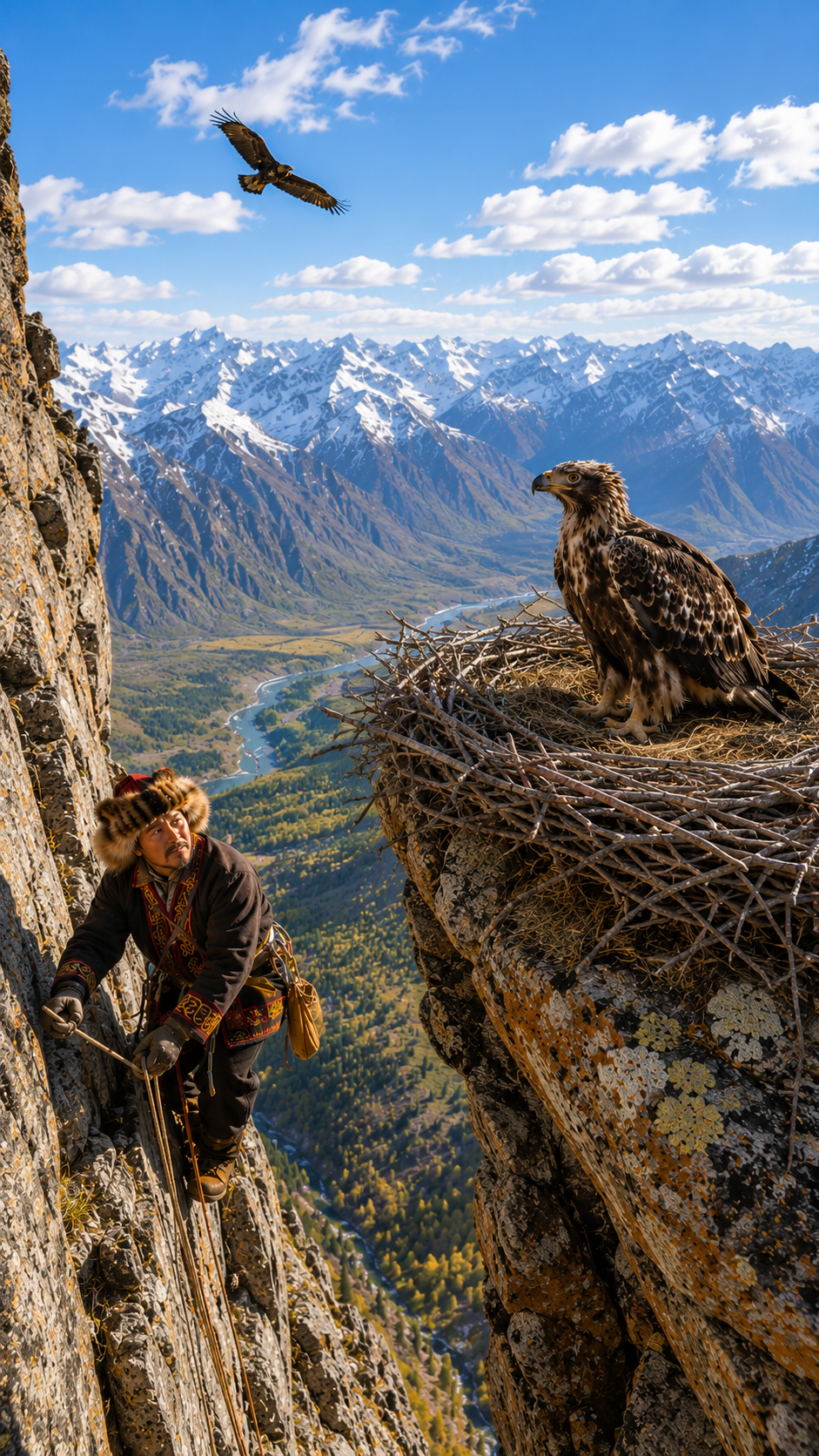
Every Berkutchi's journey begins with a single moment of trust. Traditionally, many hunters sought a young golden eagle while it was still capable of forming a lasting bond with a human, yet old enough to retain the instincts that would one day make it an extraordinary hunter.
High among the rugged cliffs of the Altai Mountains, the next generation of golden eagles begins its life in the wild. Reaching these remote nests demands experience, patience, and respect for both the bird and the unforgiving landscape. The young eagle is not simply taken—it marks the beginning of a partnership that will be shaped over many years.
Through quiet repetition, careful observation, and daily interaction, hunter and eagle gradually learn to trust one another. The relationship cannot be rushed. It is earned through consistency, understanding, and mutual respect, forming a bond unlike that shared with any domesticated animal.
For many Berkutchi, this partnership lasts for years before the eagle is eventually returned to the wild, free once again to live beneath the open skies of the Altai.

The Getaway 🦊
🎬 Video-Clip
https://www.instagram.com/reel/DbLr6uhuc6g/?igsh=ZTU0MDN0ZW84aGVk
Chapter Four — The Horse: Heart of the Steppe
For the Kazakh people, the horse has long been more than a means of transportation. It has been a trusted companion, a source of strength, and an essential part of everyday life.
Across the open steppe and rugged mountain valleys, horses carried families as they followed the seasons, gathered their livestock, visited neighboring communities, and traveled across landscapes where few other animals could endure. Their endurance, agility, and unwavering reliability made them indispensable to life on the frontier.
For the Berkutchi, the horse is an equally important partner. While the golden eagle commands the skies, the horse provides the steady foundation from which the hunter works. Together, rider, horse, and eagle move across the land as a team, each contributing unique abilities that have been refined through generations of experience.
In the Altai Mountains, this partnership reflects more than tradition. It is a way of life shaped by the land, strengthened through cooperation, and passed from one generation to the next.

BERKUTCHI & EAGLE 🦅
🎬 Video-Clip
https://www.instagram.com/reel/DbLxin0JbjS/?igsh=MThwNHNjcndybHR2Mg==
Chapter Five — A Way of Life
To understand the Berkutchi is to understand that no part of this tradition exists alone. The hunter, the golden eagle, the horse, the guardian dog, and the family are all connected by the same landscape and the same way of life.
For generations, Kazakh families have lived in harmony with the rhythms of the seasons, relying upon one another and the animals they have raised and trained with care. Every member of the household has a role to play, and every partnership contributes to the strength of the whole.
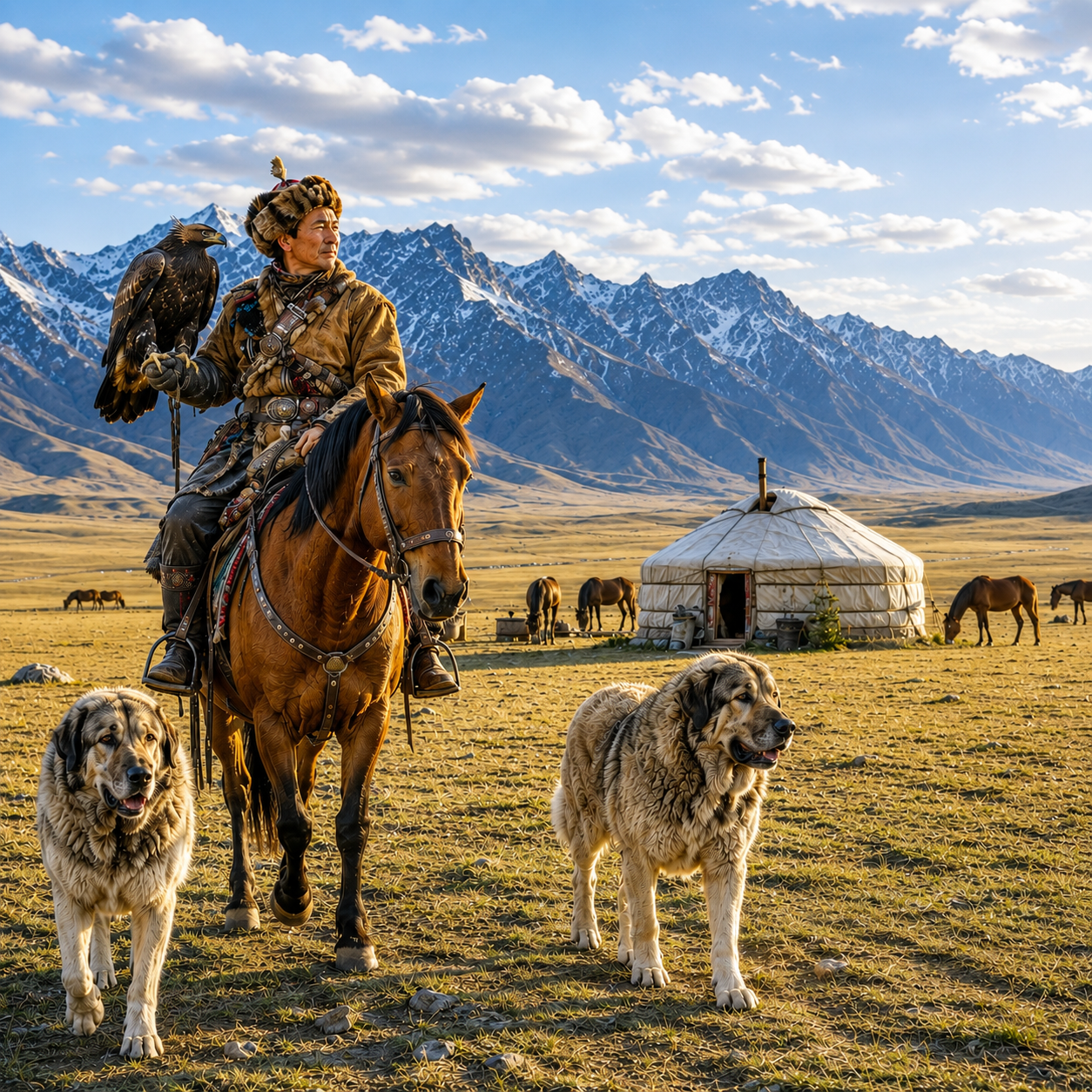
The yurt stands as the center of family life, while the surrounding mountains, valleys, and open steppe provide both opportunity and challenge. Here, traditions are not preserved in museums—they are lived each day through work, responsibility, and respect for the natural world.
It is this enduring connection between people, animals, and the land that has allowed the culture of the Berkutchi to endure across the generations.
Alabai: Protectors of the Altai 🦮
🎬 Video-Clip
https://www.instagram.com/reel/DbL5rlhJ6Vu/?igsh=MXJ1NHRuYm43MTQxOQ==
Chapter Six — Life on the Kazakh Steppe
Life on the Kazakh steppe is built upon enduring partnerships. Each plays a distinct role, yet together they form a way of life that has been shaped by the land for centuries.
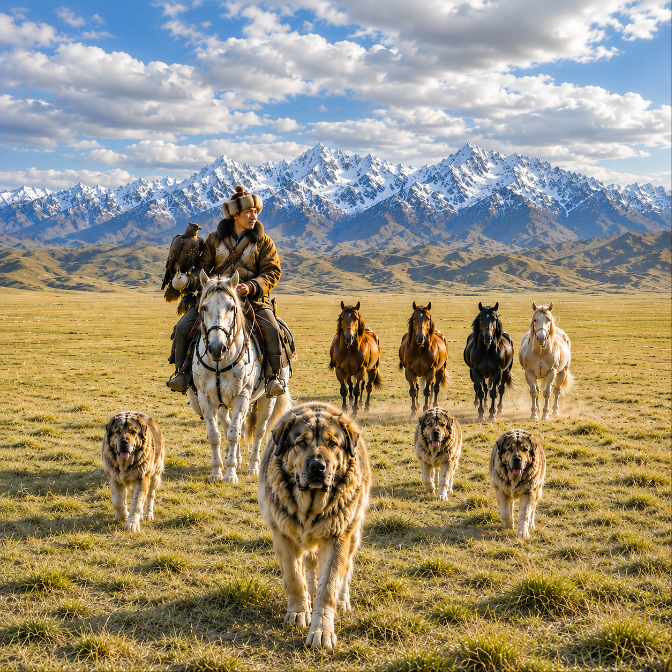
The golden eagle commands the skies with extraordinary vision and precision. The horse carries its rider across vast distances with strength and endurance. The Alabai faithfully protects livestock, home, and family with unwavering courage. Together, they create a remarkable balance between people, animals, and the natural world.
At the heart of this life stands the yurt, where families gather, stories are shared, and traditions are preserved. Beyond its walls, the Altai Mountains continue to shape the lives of those who call them home, just as they have for countless generations.
Here, culture is not preserved in museums or remembered only through history. It is lived each day—in the work of the hunter, the loyalty of the guardian dog, the endurance of the horse, and the enduring bonds of family.
Chapter Seven — The Alabai
For thousands of years, the Alabai has stood as one of Central Asia's most trusted guardians. Bred to protect livestock, families, and their camps, these remarkable dogs possess a rare combination of strength, intelligence, and quiet confidence.
On the open steppe, danger could appear without warning. Wolves and other predators tested both people and livestock, making dependable guardian dogs an essential part of daily life. Ever watchful, the Alabai earned its place not only through courage, but through unwavering loyalty to those under its care.
From an early age, Alabai puppies learn by observing the older dogs, gradually assuming the responsibilities that have been passed down through countless generations. In time, they become more than guardians—they become trusted companions, sharing in the rhythms of everyday life alongside the families they protect.
Like the golden eagle soaring above and the horse carrying its rider across the steppe, the Alabai represents another enduring partnership between the Kazakh people and the natural world—a partnership built on trust, respect, and generations of shared experience.
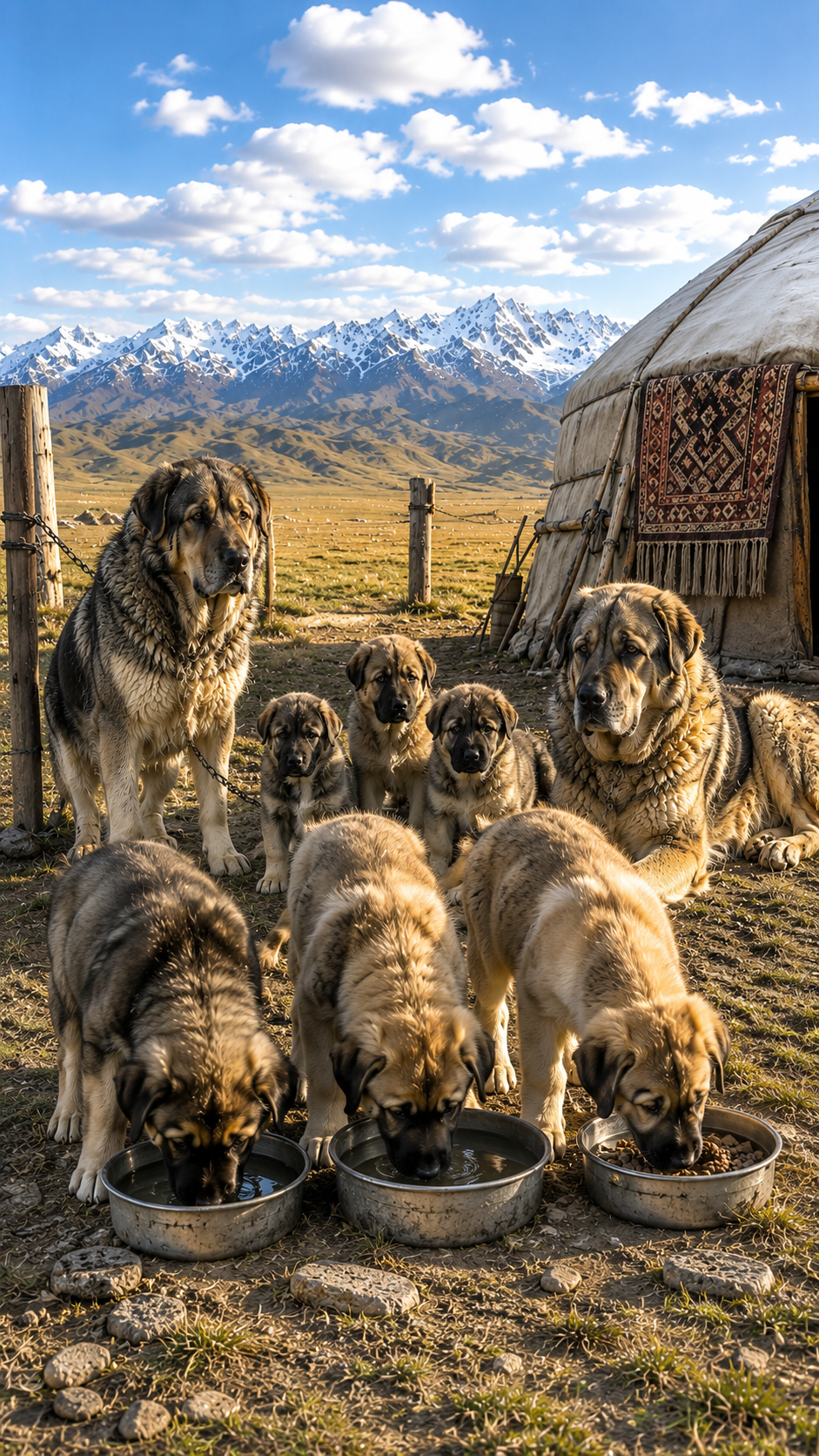
Alabai: Guardians of the Steppe 🏔
🎬 Video-Clip
https://www.instagram.com/reel/DbL9YiupGQA/?igsh=N3hjZzF5YWFkampp
Chapter Eight — Stories Beneath the Stars
As the day draws to a close and the mountains grow quiet, families gather around the warmth of the fire. It is here, beneath the vast skies of the Altai, that memories are shared, lessons are remembered, and traditions are carried forward.
The story of the Berkutchi is not preserved in books alone. It lives in conversations between elders and children, in skills patiently taught through example, and in the values of respect, responsibility, and perseverance passed from one generation to the next.
Each generation becomes both a student and a teacher, receiving the wisdom of those who came before while preparing those who will one day follow. In this way, the traditions of the Kazakh people continue to live—not as relics of the past, but as a living heritage that continues to inspire the present.
As the fire burns and the stars fill the night sky, one truth becomes clear: the greatest legacy is not simply the traditions we inherit, but the ones we faithfully pass on.
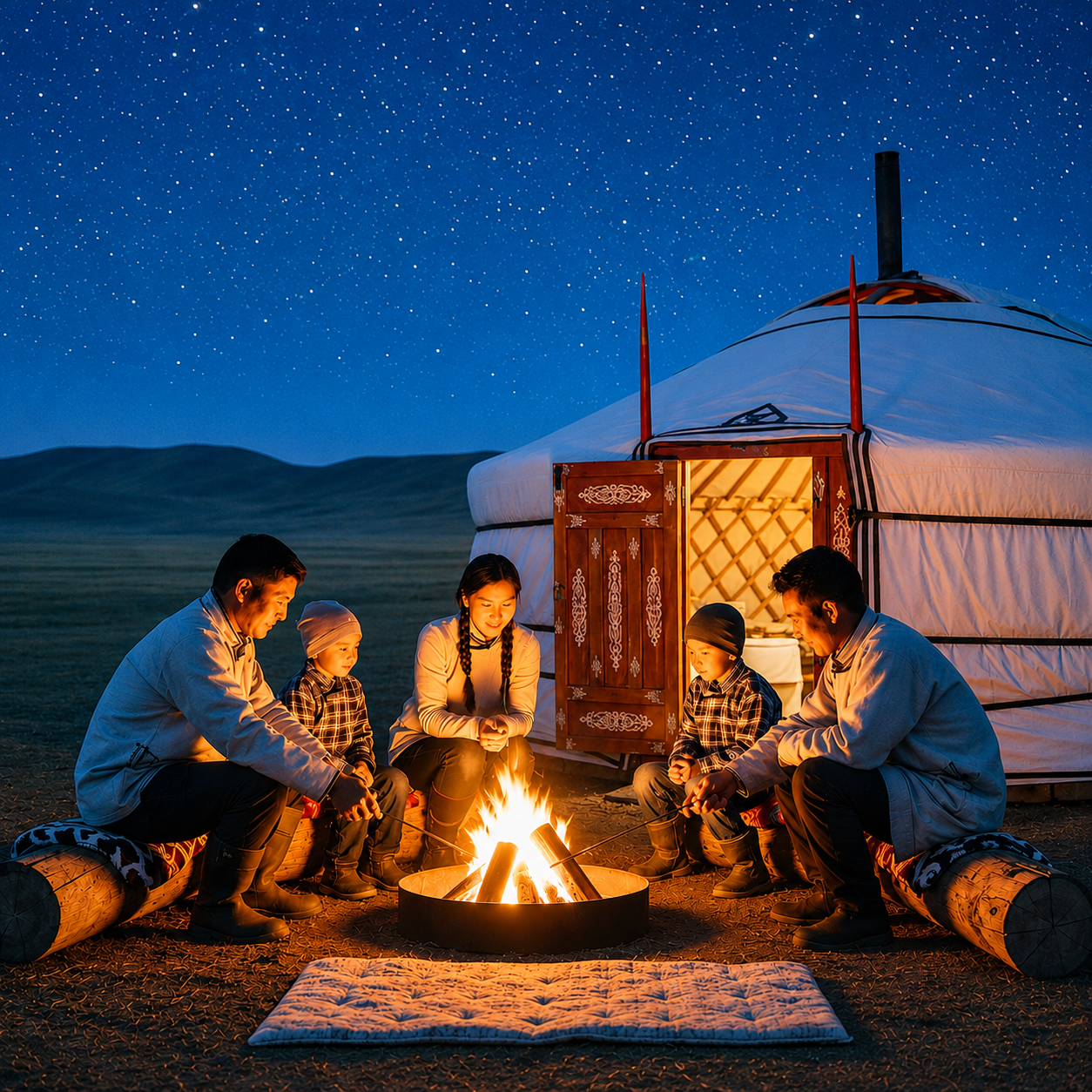
The Keeper of Stories 📖 🦅
🎬 Video-Clip
https://www.instagram.com/reel/DbMD8DGJ3Cf/?igsh=MWt5b2RjanI3eDM0aA==
Closing Reflection
A Living Legacy
Across the Altai Mountains, the rhythm of life continues much as it has for generations. The horse still crosses the open steppe. The golden eagle still rides the wind. The faithful Alabai still stands watch. And around the evening fire, stories continue to be shared beneath an endless sky.
The Berkutchi tradition reminds us that the strongest partnerships are built not through force, but through patience, trust, and mutual respect. These relationships—between people, animals, and the land—have helped shape a culture that continues to thrive despite the passage of time.
Exactly when the first hunter looked toward the sky and imagined a partnership with a bird of prey has been lost to time. Falconry has been practiced for thousands of years, carried across cultures and generations through observation, experience, and story. Among the Kazakh people of the Altai, that ancient relationship took a remarkable form in the Berkutchi tradition of hunting with the golden eagle.
What began long ago became knowledge—learned, refined, remembered, and passed from one generation to the next.
Nature does more than help us survive. It gives us the means to thrive.
It gives us food and drinkable water, materials for shelter and clothing, and animals upon which people have depended for generations. Human beings learned by paying attention—to the weather, the changing daylight, the Moon and stars, the movement of animals, and the land beneath their feet. For hunter-gatherers and travelers, the night sky also became a guide across open land.
Today, we check a weather app. Our ancestors checked the sky.
The tools have changed, but the need to observe, understand, and prepare has not.
The San, Indigenous peoples of southern Africa historically often referred to as “Bushmen,” offer another example. Across generations, close observation of wildlife, plants, drought, water, and the land became knowledge essential to living within their environment.
Nature was not simply scenery. It was information.
The same truth can be seen in the golden eagle and the fox. Across the open steppe, the fox appears exposed as the eagle descends from above. Then it races toward a maze of boulders, where the land itself becomes a defense.
Strength is not always found in overpowering an opponent with speed, flight, or force. Sometimes, it is found in awareness.
And that is why stories matter.
Stories entertain us, lift our spirits, and bring us together. But they also carry something deeper: knowledge and identity. They preserve what people have discovered, what dangers they learned to avoid, what signs in nature deserved attention, and what previous generations believed was worth remembering.
Storytelling became part of thriving. Knowledge carried from one generation to the next helped families find food and water, raise children, strengthen communities, and continue as a people.
The legacy of the Berkutchi is larger than the hunt itself. It is knowledge gathered through generations of experience, carried forward through story, and preserved as part of a people’s identity.
In many ways, we are still doing what our ancestors did. We observe. We learn. We adapt. We build upon what came before and pass what we have learned to those who follow.
Nature teaches. People observe. Stories remember.
And from one generation to the next, knowledge and identity endure.

