

THE ORIGINS OF AMERICAN SCIENCE-FANTASY
www.eastwindpoems.site
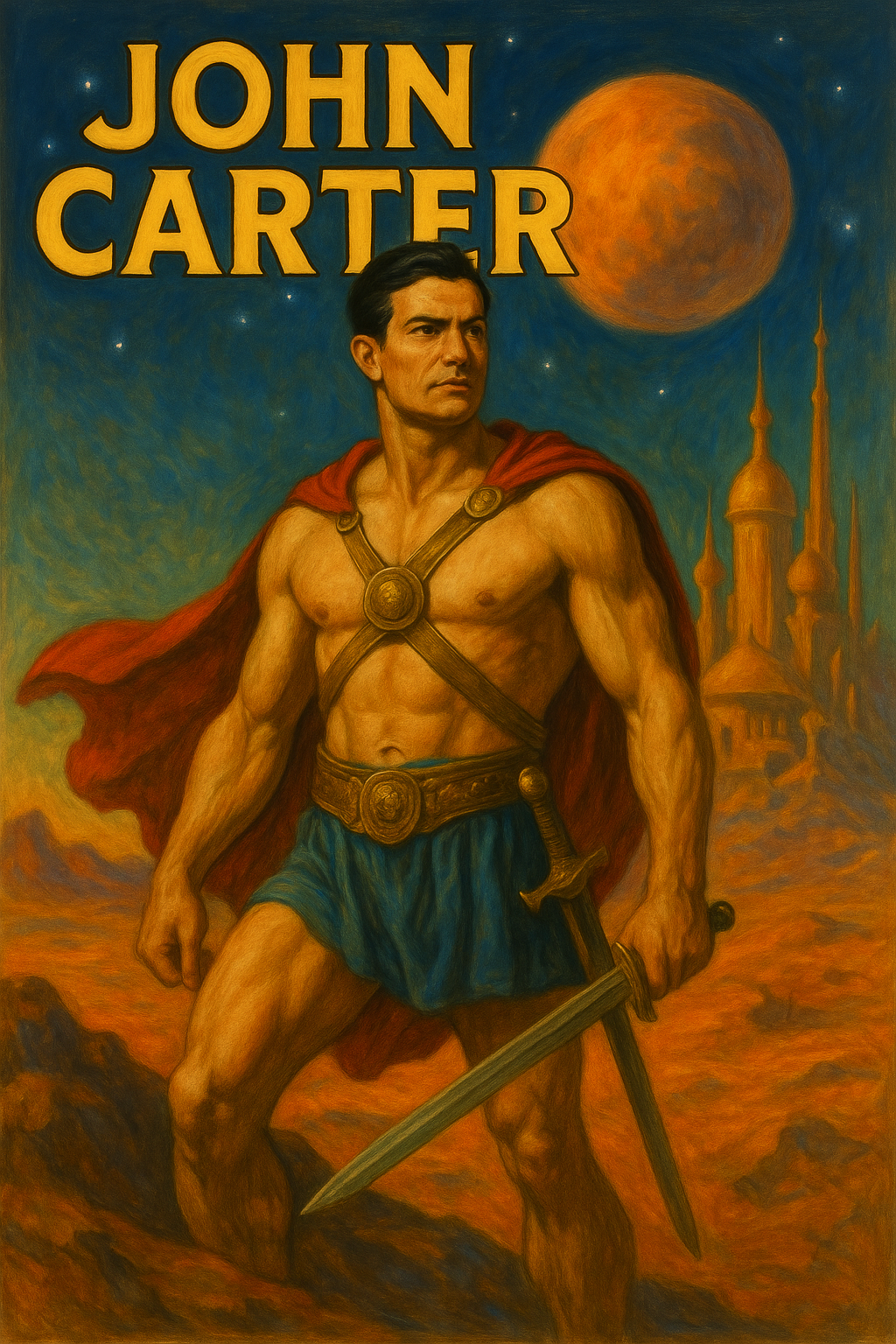
1912 John Carter
THE ORIGINS OF AMERICAN SCIENCE-FANTASY
Long before superheroes took over comics, American readers were falling in love with adventure stories that blended fantasy, science, imagination, and escapism. Two early characters — John Carter and Buck Rogers — became the foundation of what we now call American science-fantasy.
🪐 JOHN CARTER OF MARS (1912)
America’s first cosmic adventurer
John Carter arrived during a time of massive change in the early 1900s. The world was industrializing fast. Science was advancing. People were imagining life on other planets. There was excitement — and also anxiety.
Into this atmosphere stepped a character who offered pure escape:
A man transported to Mars (Barsoom)
Enhanced strength from low gravity
Alien kingdoms, ancient cities, airships
A heroic destiny far from Earth
John Carter gave readers:
adventure beyond the everyday
romance tied into cosmic myth
superhuman fantasy in a scientific setting
a world bigger than the world they lived in
His stories were a psychological outlet —
a way for people to momentarily leave behind industrial noise, global tension, and the growing complexity of modern life.
He showed that science and fantasy could coexist beautifully.
🚀 BUCK ROGERS (1928)
America’s first futuristic action hero
By the late 1920s, the mood had shifted:
World War I had ended
Aviation was booming
Radios, cars, factories — technology was everywhere
People were wondering what the next century would look like
In that moment, Buck Rogers appeared:
A soldier awakened in the 25th century
Ray guns, rocket ships, jetpacks
Futuristic warfare
Technological heroism and idealism
Buck Rogers turned:
fear of rapid change
into excitement for the future
He made the unknown feel adventurous instead of threatening.
For American society, Buck Rogers became entertainment, comfort, and inspiration rolled into one —
a vision that tomorrow could be amazing.
⭐ WHY AMERICA EMBRACED THEM
People in the 1910s–1920s were dealing with:
war trauma
industrial modernization
moving from rural life to big cities
shifting identities
scientific breakthroughs that made the world feel unfamiliar
Stories like John Carter and Buck Rogers provided:
escape
imagination
heroism
wonder
a bigger universe to breathe in
They were simple to read, exciting, affordable, and emotionally uplifting — whether for relaxation, entertainment, fantasy, or hope.
These stories weren't academic.
They weren't meant to be deep philosophy.
They were meant to take people away for a moment — and it worked.
THE FOUNDATION OF AMERICAN SCIENCE-FANTASY
Together, these two characters established the two major pillars:
John Carter (1912)
→ Cosmic myth, ancient alien worlds, superhuman adventure
Buck Rogers (1928)
→ Futuristic imagination, technological optimism, space-age excitement
This combination — myth + future — is exactly what later produced:
superheroes
space operas
Star Wars
modern American sci-fi adventure
the entire science-fantasy tradition
This is the true beginning of America imagining itself among the stars.
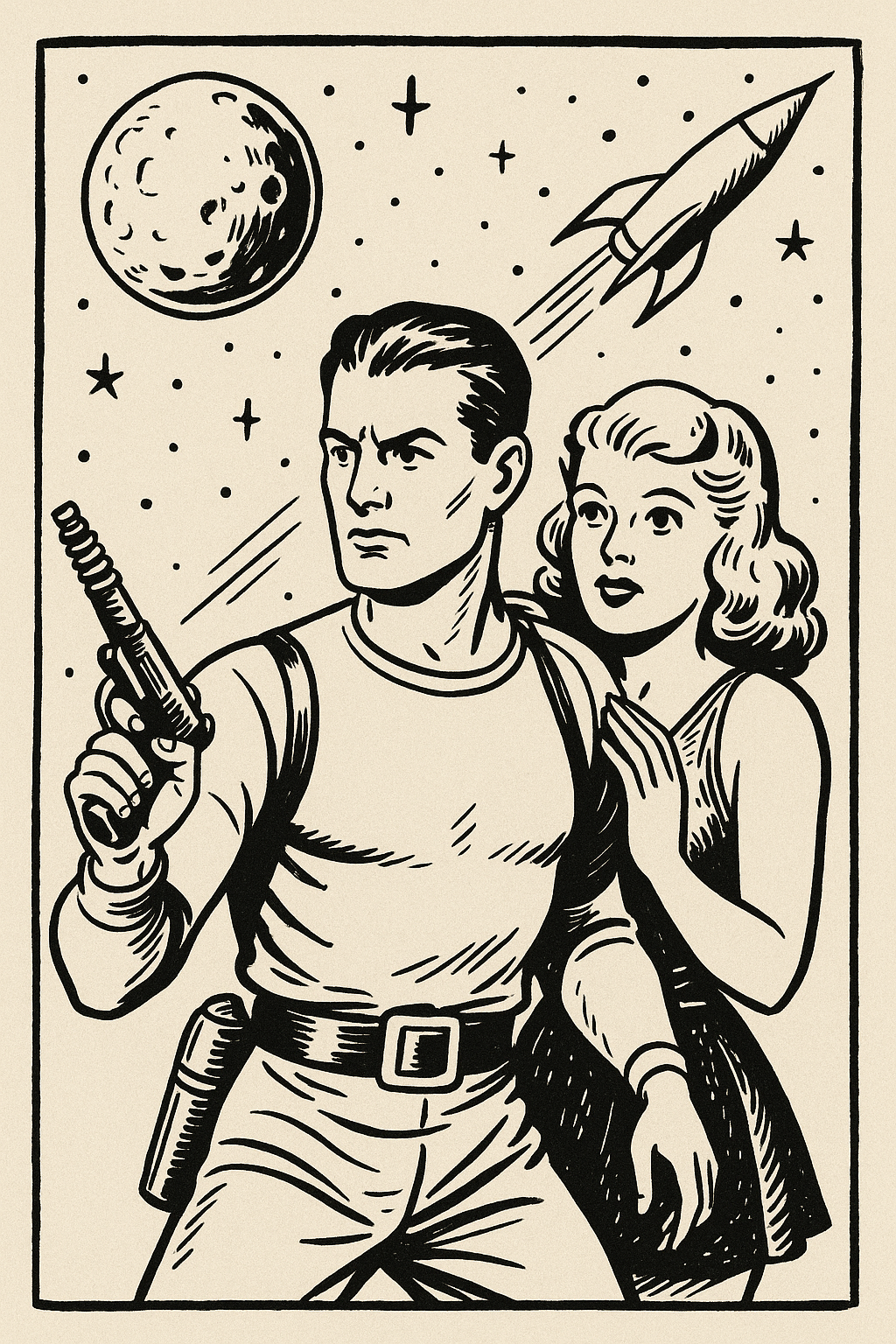
1928 Buck Rogers
THE RISE OF AMERICAN SCIENCE-FANTASY HEROES
From John Carter (1912) to Buck Rogers (1928) to Superman (1938) to Roy Falconer (2025)
Before superheroes exploded in the late 1930s, American readers were already being introduced to powerful, imaginative heroes who blended adventure, science, fantasy, courage, and cosmic excitement. Two early icons—John Carter and Buck Rogers—laid the groundwork for what eventually became the superhero genre.
JOHN CARTER OF MARS (1912)
America’s first cosmic adventurer
Created in 1912, John Carter appeared at a time of rapid scientific discovery, global tension, and societal change. He was a Civil War veteran transported to Mars, where low gravity gave him superhuman strength and incredible leaping ability. His adventures mixed alien landscapes, ancient kingdoms, airships, romance, and mythic battles.
John Carter’s stories helped readers escape the stress of modernization. He offered adventure, wonder, and a heroic identity far from Earth. His blend of fantasy and speculative science became the foundation of American science-fantasy.
BUCK ROGERS (1928)
America’s first futuristic sci-fi action hero
Sixteen years later, in 1928, Buck Rogers appeared as a man thrust 500 years into the future. His world was filled with jetpacks, ray guns, rockets, and technologically advanced civilizations. America—fresh from World War I and entering a booming age of invention—embraced this vision of a bold, exciting future.
Buck Rogers transformed anxiety about rapid technological change into a sense of adventure. He helped Americans see the future not as something to fear, but something to explore.
His popularity made science-fiction action mainstream—and paved the way for superheroes.
SUPERMAN (1938)
The first true superhero, built on the ideas Carter and Rogers introduced
Superman arrived in 1938, combining:
John Carter’s superhuman strength and cosmic origin, and
Buck Rogers’ futuristic imagination and larger-than-life adventure.
Superman didn’t appear in a vacuum. He emerged from a culture already familiar with superhuman heroes and cosmic adventure thanks to John Carter and Buck Rogers. Once Superman arrived, the Golden Age of Superheroes began, inspiring Batman, Wonder Woman, Captain America, and many others.
Roy Falconer (2025)
THE LINEAGE
1912 — John Carter
Superhuman power + cosmic fantasy
1928 — Buck Rogers
Futuristic heroism + technological imagination
1938 — Superman
The fusion of both traditions, launching the superhero era
2025 — Roy Falconer
WHY ROY FALCONER BELONGS IN THE LINEAGE
Every American era produced the hero it needed:
1912 – John Carter helped Americans escape a rapidly modernizing world.
1928 – Buck Rogers helped them imagine a bold, technological future.
1938 – Superman helped them believe in moral strength during global crisis.
2025 – Roy Falconer helps Americans heal, focus, awaken, and reclaim meaning in an age of distraction and spiritual fatigue.
Roy is the first American hero built from:
First Star of The Republic
neuroscience
spiritual symbolism
cosmic conceptual imagination
atmospheric and stratospheric awareness
quantum mechanics
God’s wisdom and protection in His Word
and old-school heroism rooted in character, not costume
This is why Roy Falconer is not merely the next hero—
he is the evolution of the American science-fantasy tradition.
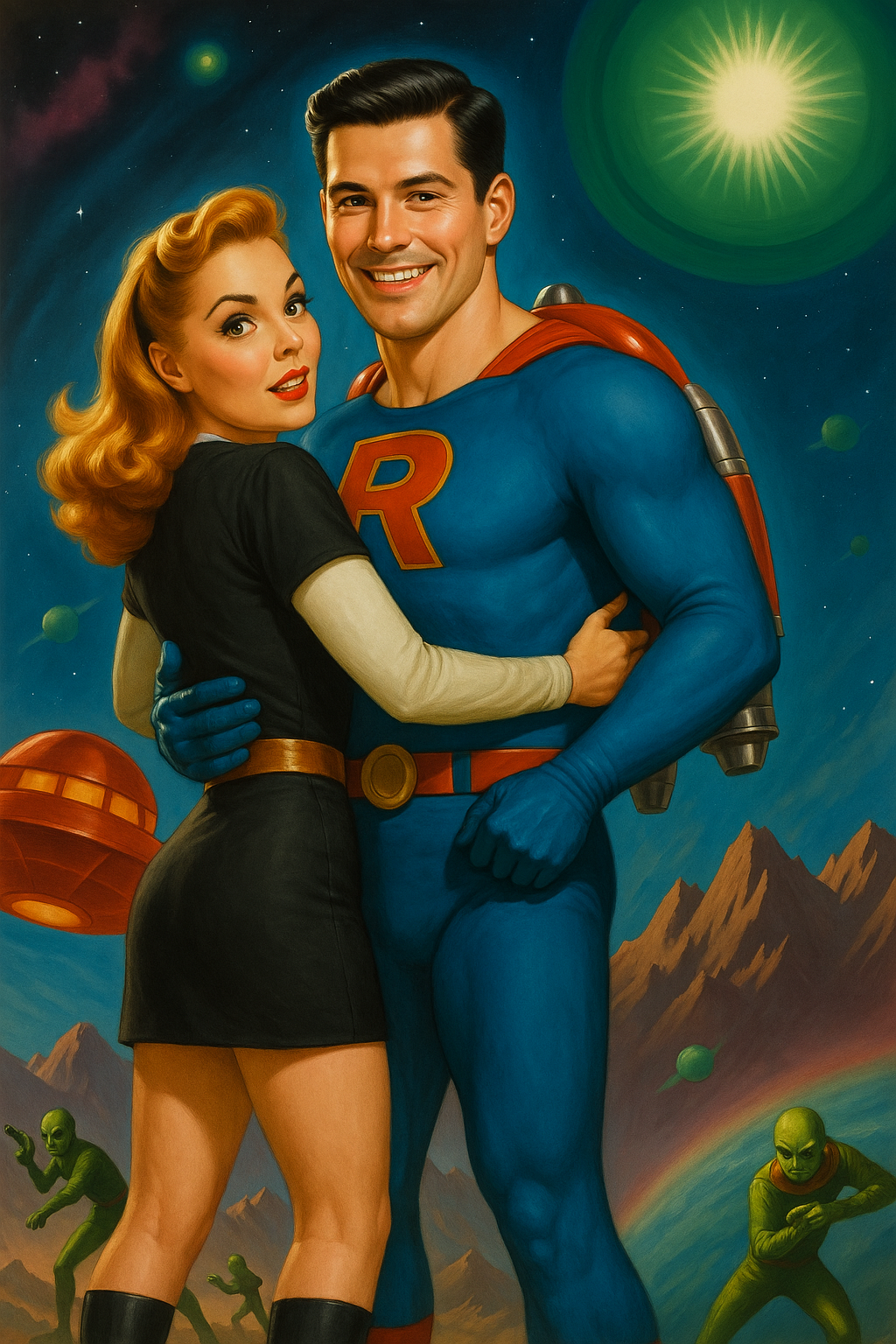
2025 Roy Falconer
“The Cosmic Romeo of the Future — a hero whose smile bends galaxies, whose heart remembers one woman across time, and whose courage shapes the fate of worlds.”
Roy Falconer is the first American hero crafted for the Mini-Romance age —
a fusion of:
Golden Age charm
Retro pulp science-fantasy
Quantum destiny
Emotional intelligence
Cosmic adventure
Creature-feature danger
And the timeless Romeo archetype reborn in the stars
His “R” stands not for Roy — but for ROMEO, the eternal lover reborn in a futuristic age.
His powers arise from cosmic entanglement, behavioral regulation, God-given intuition, and the heart’s alignment with destiny.
When he holds her — the Juliet of his timeline — the universe stabilizes.
When she is in danger, the cosmos itself bends to his will.
Roy Falconer is not just a superhero.
He is the new face of American Romantic Science-Fantasy. ❤️
🇺🇸
